
Choosing the best two-pole voltage and continuity tester involves more than comparing price, voltage range or display type.
For electricians, industrial maintenance engineers and electrical equipment distributors, a professional tester must offer a practical combination of electrical safety, environmental protection, reliable indication and convenient operation.
Whether you are equipping a maintenance team or sourcing electrical testing instruments for your distribution business, understanding the key specifications can help you make a better purchasing decision.
This buying guide explains seven essential features to consider when selecting a professional two-pole voltage tester.
1. CAT III 1000V / CAT IV 600V Safety Rating
The measurement category is one of the first specifications professional buyers should examine.
Electrical testing instruments operating in distribution systems must withstand transient overvoltages that may occur during switching operations or electrical disturbances.
| Measurement Category | Типичная область применения |
|---|---|
| CAT II | Appliances and socket-connected equipment |
| КАТЕГОРИЯ III | Distribution boards, fixed installations and industrial equipment |
| CAT IV | Origin of low-voltage installations, electricity meters and service entrances |
A CAT III 1000V / CAT IV 600V two-pole voltage tester provides measurement-category coverage suitable for a broad range of professional electrical environments, subject to its specified operating voltage limits.
For procurement teams, it is important to verify both the measurement category and the maximum permitted working voltage.
For example, a tester with a CAT III 1000V rating may have a maximum voltage indication range of only 690V.
Buying tip: Never assume that the measurement category rating is the same as the instrument’s maximum voltage measurement range.
2. IP65 Dust and Water Protection
Electrical testing instruments are frequently exposed to dust, moisture and demanding working environments. An appropriate ingress protection rating helps reduce the risk of environmental damage and premature equipment failure.
An IP65-rated voltage tester provides:
- IP6X: Dust-tight enclosure protection.
- IPX5: Protection against water jets under specified test conditions.
Compared with lower IP ratings, IP65 offers enhanced enclosure protection for demanding environments.
| IP Rating | Dust Protection | Water Protection |
|---|---|---|
| IP54 | Dust protected | Splashing water |
| IP64 | Dust-tight | Splashing water |
| IP65 | Dust-tight | Water jets |
| IP67 | Dust-tight | Temporary immersion |
An IP65 voltage tester is particularly valuable for applications such as industrial manufacturing, construction sites, electrical equipment servicing and outdoor maintenance.
However, IP65 does not mean completely waterproof or suitable for underwater operation. Electrical testing in wet conditions must follow the instrument manufacturer’s instructions.
Buying tip: For professional maintenance teams working in dusty or demanding environments, IP65 is a valuable durability specification. Ingress Protection per IEC 60529
3. VDE, GS and Relevant Safety Certifications
Product certification is an important consideration when purchasing electrical testing instruments, especially for European distribution and professional applications.
A professional two-pole voltage tester may carry several safety and conformity markings.
| Certification or Standard | What Buyers Should Know |
|---|---|
| VDE | Independent product testing and certification against applicable electrical safety requirements |
| GS | German voluntary tested-safety certification |
| CE | Manufacturer’s declaration of conformity with applicable EU legislation |
| EN 61243-3 | Dedicated standard for two-pole low-voltage detectors |
| EN 61010-1 | General safety requirements for electrical measurement, control and laboratory equipment |
For electrical tool distributors, documented conformity can help streamline supplier evaluation and support market access requirements.
Honeytek’s HK235A and HK235B product catalogue lists VDE, GS and CE among their certification markings. Two-Pole Voltage Tester A3折页 251011.5(转曲)+1
Buying tip: Request current, model-specific certificates and declarations of conformity before placing bulk or OEM orders. Check that the documentation covers the exact product configuration being purchased.
4. Wide AC/DC Voltage Range: From 12V to 690V and Beyond
Voltage range determines how many electrical applications an instrument can support.
A professional 12–690V AC/DC two-pole voltage tester can cover many common testing requirements across residential, commercial and industrial installations.
| Electrical Application | Typical Nominal Voltage |
|---|---|
| Low-voltage control circuits | 12V / 24V DC |
| Industrial control systems | 24V / 48V DC |
| Residential electrical systems | 120V / 230V AC |
| Commercial distribution | 230V / 400V AC |
| Industrial three-phase equipment | 400V / 480V AC |
| Heavy industrial installations | Up to 690V AC |
| High-voltage DC and solar PV equipment | 1000V / 1200V / 1500V DC |
For conventional building installations, a 690V tester is often sufficient. However, renewable energy equipment and higher-voltage DC systems may require instruments with extended DC voltage ranges and suitable measurement categories.
Buying tip: Select the instrument according to the highest expected circuit voltage, electrical environment and required minimum detection threshold—not simply the most common voltage in your facility.
5. Clear LED or LCD Voltage Indication
Display design directly affects how efficiently electricians can identify test results.
Professional two-pole voltage testers generally use LED indicators, LCD screens or a combination of both.
LED Voltage Testers
LED indicators provide visual confirmation at predefined voltage levels, making them practical for routine voltage checks.
Key advantages include:
- Fast voltage identification.
- Simple and intuitive operation.
- Clear indication of nominal voltage levels.
- Convenient use during routine electrical inspections.
LED + LCD Voltage Testers
A dual-display instrument combines voltage-level indicators with numerical readings.
This configuration is useful when technicians need more detailed voltage information for equipment diagnostics or commissioning.
| Display Type | Recommended Application |
|---|---|
| Светодиод | Routine electrical inspections and installation testing |
| LCD | Numerical voltage readings and detailed diagnostics |
| LED + LCD | Multifunctional industrial testing |
Additional features such as backlighting, acoustic alarms and vibration alerts can improve usability in low-light and noisy working environments.
Buying tip: Choose an LED tester for straightforward voltage identification or a dual-display model when numerical readings are important to your work.
6. Continuity, Phase Rotation and Additional Diagnostic Functions
The best professional two-pole voltage and continuity tester should support the everyday diagnostic requirements of electricians without unnecessary complexity.
Useful supplementary functions include:
| Function | Practical Application |
|---|---|
| Continuity testing | Checking disconnected cables, fuses and electrical connections |
| Phase rotation indication | Identifying phase sequence in three-phase systems |
| Индикация полярности | Identifying DC polarity |
| Single-pole phase testing | Preliminary phase identification |
| Switchable load | Assisting with interference voltage evaluation |
| Испытание срабатывания УЗО | Supporting protective-device checks within specified limits |
| Измерение сопротивления | Diagnosing electrical components |
| Frequency measurement | Evaluating supply and equipment frequency |
For industrial maintenance teams, combining several diagnostic functions in one instrument can reduce the number of tools required for routine inspections.
However, supplementary RCD trip functions should not be confused with the comprehensive testing capabilities of a dedicated RCD or multifunction installation tester.
Buying tip: Evaluate the actual functions your technicians need. More measurement functions are not always necessary for every application.
7. Ergonomic Design and Practical Job-Site Features
The construction of a voltage tester can be just as important as its electronic specifications.
Electricians often work in confined electrical cabinets, poorly illuminated equipment rooms and areas where background noise makes audible warnings difficult to hear.
Practical design features to look for include:
- Ergonomic handles with protective finger guards.
- Insulated probes and protective probe caps.
- Integrated flashlight for improved visibility.
- Durable connecting cable with strain relief.
- Selectable acoustic, silent and vibration modes.
- Probe spacing suitable for designated socket testing.
- Convenient battery replacement and instrument self-check functions.
For distributors and professional buyers, mechanical durability, comfortable handling and product consistency can also influence customer satisfaction and long-term purchasing costs.
Buying tip: Request product samples before bulk procurement to evaluate handling, probe construction, display visibility and overall build quality.
Movement between electrical locations and frequent daily testing make these seemingly minor design details valuable in professional applications.
Professional Two-Pole Voltage Tester Buying Checklist
Before selecting a voltage and continuity tester, use the following checklist to evaluate the product against your application requirements.
| Purchasing Criteria | Recommended Specification |
|---|---|
| Voltage range | Suitable for the intended AC/DC system |
| Measurement category | CAT III 1000V / CAT IV 600V where applicable |
| Environmental protection | IP65 for demanding environments |
| Safety standard | EN 61243-3 compliance |
| Certification documentation | VDE, GS, CE as applicable to the target market |
| Отображение | LED or LED + LCD |
| Continuity testing | Optical and acoustic indication |
| Phase rotation | Recommended for three-phase applications |
| Additional functions | Polarity, load function or resistance testing as required |
| Job-site usability | Flashlight, ergonomic housing and vibration alerts |
| Supplier support | Technical documentation, warranty and OEM/ODM support |
For bulk procurement, buyers should also confirm product revision numbers, packaging requirements, certificate validity and supplier quality-control procedures.
Recommended Professional Two-Pole Voltage Testers from Honeytek
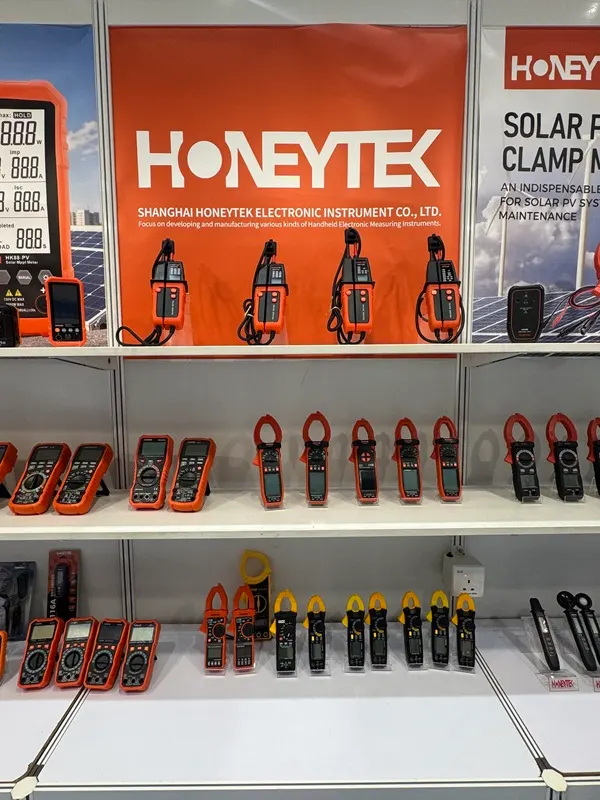
Honeytek offers different voltage tester configurations to meet the requirements of building electricians, industrial maintenance engineers and renewable energy technicians.
Honeytek HK235A – 12–690V Two-Pole Voltage and Continuity Tester
Honeytek HK235B – 1000V AC / 1200V DC Voltage and Resistance Tester
Honeytek HK235A vs. HK235B: Product Selection Guide
| Особенность | HK235A | HK235B |
|---|---|---|
| Voltage range | 12–690 В переменного/постоянного тока | Up to 1000V AC / 1200V DC |
| Отображение | Светодиод | LED + LCD |
| Measurement category | CAT III 1000 В / CAT IV 600 В | CAT III 1000 В / CAT IV 600 В |
| Класс защиты по IP | IP65 | IP65 |
| Continuity test | Да | Да |
| Phase rotation | Да | Да |
| DC polarity indication | Да | Да |
| Измерение сопротивления | No dedicated numerical function | Да |
| Предупреждение о вибрации | Да | Да |
| Integrated flashlight | Да | Да |
| Recommended application | Building installation and routine maintenance | Advanced industrial and higher-voltage diagnostics |
Product specifications are based on Honeytek’s published documentation. Maximum permitted operating voltages depend on the measurement category and application conditions.
Frequently Asked Questions (FAQ)
What is the best two-pole voltage and continuity tester for electricians?
For general professional applications, look for a suitable AC/DC voltage range, appropriate CAT ratings, EN 61243-3 compliance, clear voltage indication and durable probe construction.
Models with IP65 protection, continuity testing and phase rotation indication provide additional versatility.
Is an IP65 voltage tester waterproof?
IP65 means the instrument enclosure is dust-tight and protected against water jets under specified conditions. It does not mean the instrument can be submerged in water or used in all wet electrical environments.
What does CAT IV 600V mean on a voltage tester?
CAT IV 600V indicates that the instrument is designed for specified electrical measurements at the origin of low-voltage installations, within its rated voltage and operating conditions.
It is not a general guarantee of safety at all electrical locations.
Is a 690V voltage tester sufficient for industrial applications?
A 690V voltage tester can cover many conventional industrial AC systems and lower-voltage DC circuits. Higher-voltage DC equipment and some photovoltaic applications require instruments with extended voltage ratings and suitable safety classifications.
Should I choose an LED or LCD two-pole voltage tester?
LED testers are suitable for straightforward voltage identification. LCD or dual-display testers are preferable when numerical voltage information and additional diagnostic functions are required.
Why are VDE and GS certifications important?
They can provide independent evidence of compliance with applicable product safety requirements and support supplier evaluation, particularly for European electrical tool markets.
Can I purchase customized two-pole voltage testers in bulk?
Yes. Professional instrument manufacturers such as Honeytek provide OEM/ODM services, including private-label branding, customized packaging and product development based on customer requirements.
Заключение
Selecting a professional two-pole voltage and continuity tester requires balancing electrical safety, durability, voltage coverage and practical functionality.
A suitable measurement category, IP65 enclosure, documented safety compliance, wide AC/DC voltage range and convenient diagnostic features can make a significant difference in long-term usability.
For electricians, the right instrument supports efficient daily testing. For distributors and OEM customers, choosing a reliable manufacturing partner helps ensure consistent product quality and supply stability.
Honeytek – Professional Test and Measurement Instrument Manufacturer
With 28 years of experience in the test and measurement industry, Honeytek specializes in the development and manufacturing of professional electrical testing instruments.

 English
 Português
 Español
 Français
 Deutsch
 العربية
 Русский