
Solar photovoltaic (PV) systems present unique electrical measurement challenges. High DC voltages, non-linear inverter loads, and harsh environmental conditions demand test tools built specifically for safety, precision, and durability.
Following industry-standard testing protocols for renewable energy systems, this guide breaks down essential instrument requirements and recommends high-performance Honeytek solutions for solar technicians and field engineers.
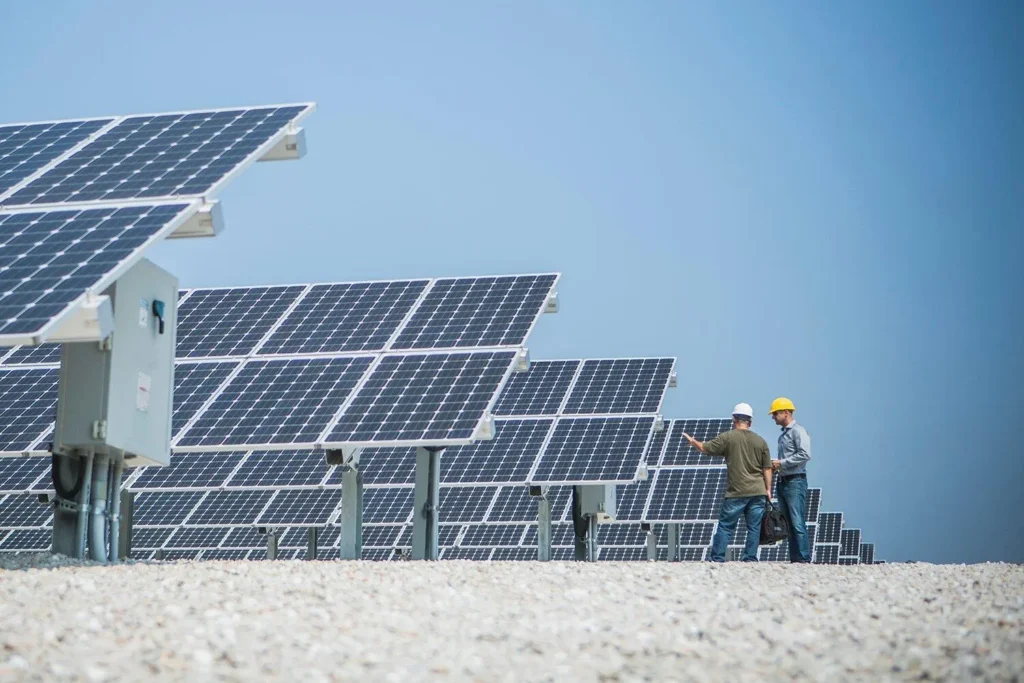
Key Technical Requirements for Solar PV Measurement Tools
When selecting a digital multimeter (DMM) or clamp meter for solar array and inverter servicing, key technical parameters must be met:
- CAT III 1000V / CAT IV 600V Safety Rating: Essential for protection against voltage transients on the direct DC side of PV arrays and junction boxes.
- True-RMS AC Voltage & Current Sensing: Accurate measurements on distorted inverter output waveforms containing high-frequency switching harmonics.
- High DC Voltage & Current Capability: Capability to accurately measure string open-circuit voltage ($V_{oc}$) up to 1000V/1500V DC and short-circuit current ($I_{sc}$).
- Inrush Current Measurement: Capturing start-up surge currents when energizing inverters and transformer systems.
- Temperature Diagnostics: K-type thermocouple sensing for identifying hotspots on PV panels, wiring connections, and thermal stress on junction boxes.
Honeytek Solar PV Product Recommendations
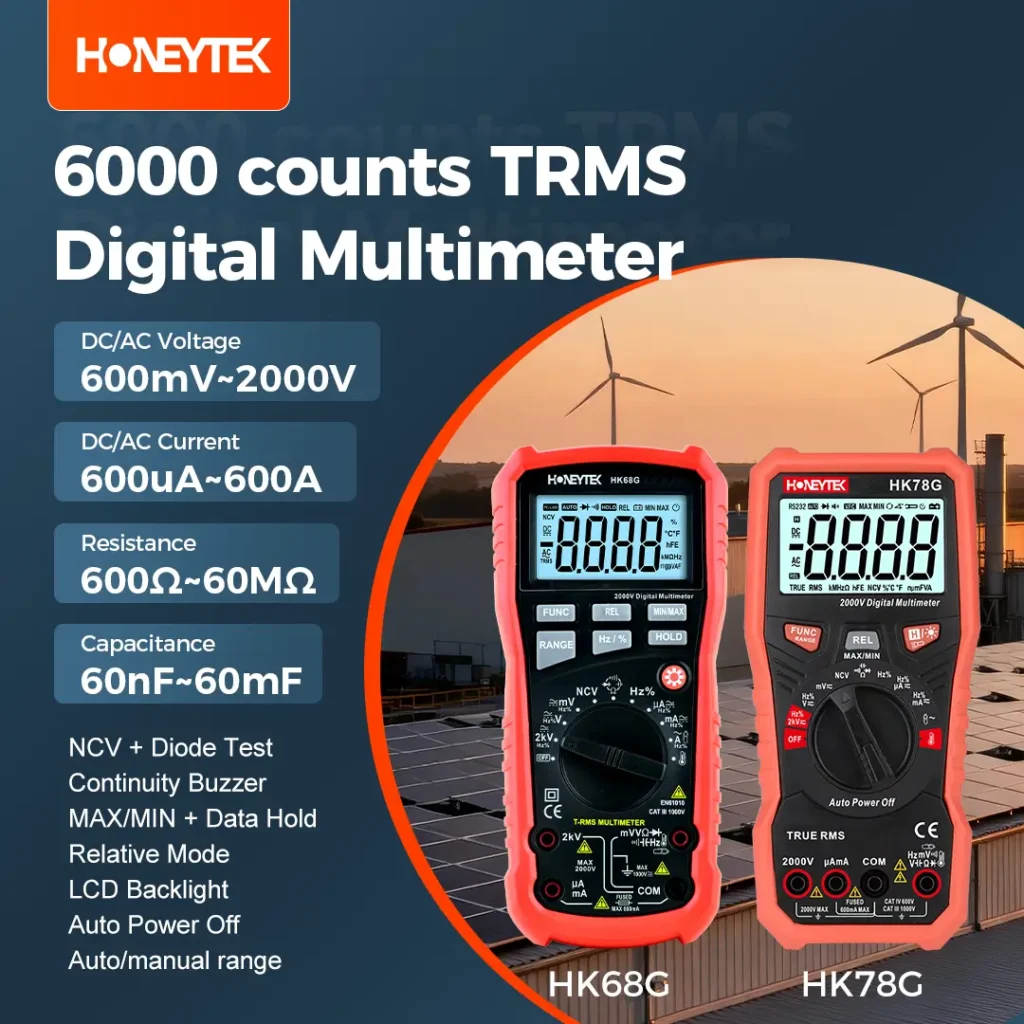
1. High-Voltage PV Array Diagnostics: Honeytek HK68G / HK78G Industrial Multimeters
- Target Application: String open-circuit voltage ($V_{oc}$) testing, inverter input DC diagnostics, and grid-tied AC output verification.
- Key Capabilities:
- 1000V DC Voltage Measurement: Fully capable of evaluating high-voltage solar strings and combiner boxes.
- True-RMS Accuracy: Delivers precise voltage measurements even in complex AC power outputs generated by solar inverters.
- High-Count Display Resolution (19,999 Count / 4½ Digit): Detects minute voltage drops across solar cells and series connections.
- Safety Standard: Engineered with robust overvoltage protection rated for high-energy field environments.
2. Combiner Box & Inverter Surge Testing: Honeytek HK688VD / HK690 AC/DC Clamp Meters
- Target Application: Measuring DC string currents ($I_{sc}$), non-intrusive current balance testing, and capturing inverter startup surges.
- Key Capabilities:
- Non-Contact Hall Effect DC Current Sensing: Allows direct measurement of string load currents without disconnecting conductors.
- Inrush Current Function: Captures the initial high-peak surge during inverter energization to evaluate circuit breaker tripping and breaker sizing.
- Narrow Jaw Architecture: Designed for easy maneuvering within cramped PV combiner boxes and tight wiring trunks.
3. Thermal Inspection & Field Maintenance: Honeytek HK820 / HK4432C Multi-Parameter Instruments
- Target Application: Spotting degraded PV modules (hotspots), checking thermal wear on terminals, and assessing environmental conditions.
- Key Capabilities:
- K-Type Temperature Measurement: Enables quick surface temperature evaluation of PV panel backsheets, electrical contacts, and heat sinks.
- All-in-One Field Utility: Combines voltage, continuity, resistance, frequency, and temperature testing to minimize equipment weight for field technicians on rooftop or utility-scale installations.
Summary Matrix: Honeytek PV Tool Selection Guide
| Solar Application | Measurement Focus | Honeytek Recommended Model |
| PV Array $V_{oc}$ & Inverter Diagnostics | 1000V DC, True-RMS AC, High Resolution | Honeytek HK68G / HK78G |
| String Current $I_{sc}$ & Inrush Testing | DC Amps Clamp, Inrush Surge Capture, Thin Jaw | Honeytek HK688VD / HK690 |
| Thermal & Comprehensive Field Inspection | K-Type Temp, Multi-parameter Testing, Durability | Honeytek HK820 / HK4432C |
Note: Always adhere to relevant national safety protocols (such as NFPA 70E or IEC 61439) and wear appropriate Personal Protective Equipment (PPE) when working near energized high-voltage DC installations.
