
In modern electrical systems, safety is not only about overload protection and circuit breakers. One of the most overlooked but critical risks is leakage current.
Even a small leakage current can lead to electric shock, nuisance tripping, insulation failure, equipment damage, or even electrical fires.
This is why professional electricians, maintenance engineers, and safety inspectors rely on leakage current clamp meters to detect hidden electrical problems before they become dangerous.
In this article, we explain:
- What leakage current is
- Why leakage current is dangerous
- How leakage current clamp meters work
- How to correctly measure leakage current
- Why the Honeytek HK221A and HK221C+ are ideal for electrical safety testing
What Is Leakage Current?
Leakage current refers to unintended current flowing from an electrical system to ground or conductive surfaces.
In properly functioning systems, insulation prevents current from escaping conductors. However, factors such as:
- Aging insulation
- Moisture
- Dust contamination
- High temperature
- Mechanical damage
- Cable deterioration
can cause electrical current to leak outside the intended circuit path.
Even in ungrounded equipment, leakage current may still flow through:
- Human bodies
- Metal surfaces
- Equipment frames
- Conductive structures
This creates serious electrical safety risks.
Why Leakage Current Is Dangerous
Electric Shock Hazard
Many electrical devices rely on insulation protection rather than grounding.
If insulation fails, leakage current may pass through the human body, causing electric shock.
This is especially dangerous in:
- Wet environments
- Industrial facilities
- HVAC systems
- Hospitals
- Data centers
Fire Risk
Small leakage currents may not be large enough to trigger traditional overcurrent protection devices.
However, continuous leakage can generate:
- Localized heating
- Electrical arcing
- Insulation carbonization
- Sparks
Over time, this may lead to electrical fires.
According to many electrical safety standards, routine leakage current inspection is an important preventive maintenance practice.
What Is a Leakage Current Clamp Meter?
A leakage current clamp meter is a specialized electrical testing instrument designed to measure very small AC currents without disconnecting wires.
Compared with standard clamp meters, leakage current clamp meters provide:
- Milliamp-level measurement
- Microamp-level sensitivity
- High-resolution current detection
- Non-contact measurement
These tools are widely used for:
- Electrical safety inspections
- Insulation troubleshooting
- RCD/GFCI trip analysis
- Industrial maintenance
- Appliance repair
- Automotive standby current testing
Advantages of Leakage Current Clamp Meters
Non-Contact Measurement
The clamp jaw allows technicians to measure current without cutting or disconnecting cables.
This improves:
- Safety
- Testing efficiency
- Troubleshooting speed
High Precision for Small Currents
Leakage current often exists in extremely small values.
Professional leakage clamp meters can measure:
- Milliamps (mA)
- Microamps (μA)
This helps technicians detect abnormal leakage before it becomes a serious fault.
Fast Fault Localization
Leakage current clamp meters help quickly identify:
- Insulation degradation
- Cable leakage
- Ground faults
- Nuisance RCD tripping
- Hidden electrical problems
How to Use a Leakage Current Clamp Meter Correctly
Correct testing method is critical for accurate readings.
Single-Phase Circuit Measurement
Clamp both:
- Live wire
- Neutral wire
at the same time.
Under normal conditions, the magnetic fields cancel each other out. Any remaining current indicates leakage current.
Three-Phase Circuit Measurement
Clamp all three phase conductors together.
This helps evaluate overall system insulation condition.
Ground Wire Measurement
Clamp directly around the grounding conductor or grounding busbar.
This method allows direct leakage current measurement from equipment.
Honeytek HK221A / HK221C+: Professional Leakage Current Clamp Meters
The Honeytek HK221A and HK221C+ are designed specifically for professional electrical safety testing and leakage current measurement.
These compact clamp meters combine high sensitivity, True RMS accuracy, and portable design for industrial and field applications.
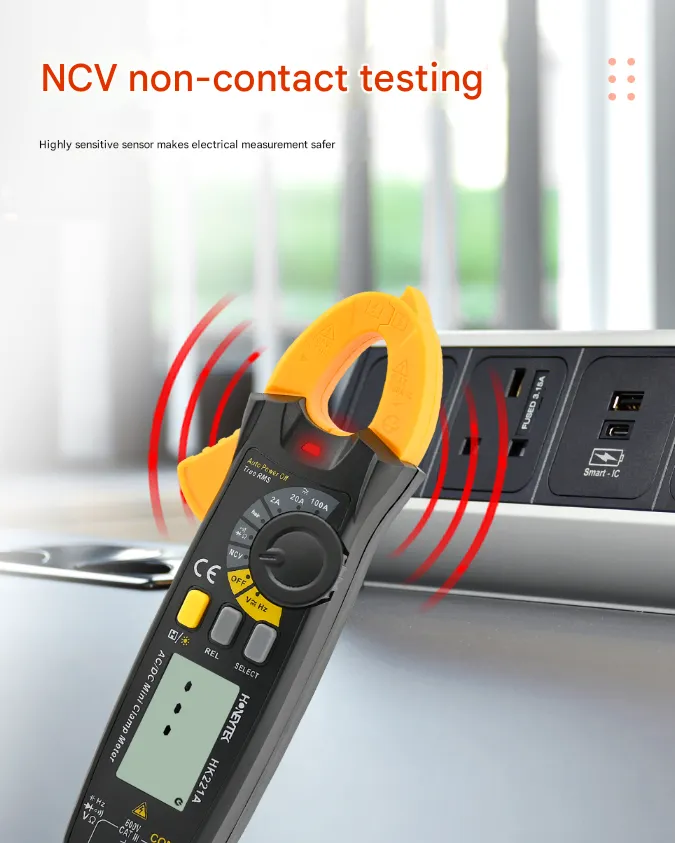
Key Features of Honeytek HK221A
Wide Measurement Range
- 0.1mA to 100A AC current measurement
- Suitable for both leakage detection and general current testing
Compact Clamp Design
- Φ19mm clamp jaw
- Ideal for narrow electrical cabinets and compact wiring spaces
Lightweight Portable Structure
- Only 165g
- Easy for daily maintenance and field inspection
True RMS Measurement
Accurate readings even in:
- Non-linear loads
- Variable frequency systems
- Industrial electrical environments
Integrated NCV Detection
Built-in non-contact voltage detection improves operational safety during inspection.

Honeytek HK221C+: Ultra-Sensitive Leakage Detection
For higher precision applications, the HK221C+ supports:
- 0.1μA to 200A measurement range
This makes it suitable for:
- Precision leakage diagnostics
- Laboratory testing
- Sensitive equipment inspection
- Data center maintenance
- Medical equipment inspection
Typical Applications of Leakage Current Clamp Meters
Routine Electrical Inspection
Regular leakage current inspection helps reduce fire and safety risks in:
- Factories
- Commercial buildings
- Residential systems
- Data centers
RCD / GFCI Troubleshooting
Leakage clamp meters help identify the exact cause of nuisance breaker trips.
Equipment Acceptance Testing
Before commissioning new equipment, technicians can verify leakage current compliance.
Industrial Maintenance
Used for:
- Cable insulation monitoring
- Preventive maintenance
- Power quality inspection
How to Choose the Right Leakage Current Clamp Meter
When selecting a leakage current clamp meter, consider the following factors.
1. Measurement Range
Ensure the meter supports:
- Microamp-level measurement
- Milliamp-level measurement
- General AC current measurement
2. Clamp Jaw Size
Larger conductors or multiple cables may require larger clamp openings.
3. Accuracy and Frequency Response
Higher accuracy reduces false diagnosis in complex electrical environments.
4. Safety Rating
Professional electrical environments require certified safety ratings such as:
- CAT III 600V
- CAT IV 600V
5. Application Environment
Different industries require different testing capabilities.
For example:
- HVAC systems
- Industrial power systems
- Automotive electronics
- Data centers
- Medical equipment
Why Leakage Current Testing Matters in Modern Electrical Systems
As electrical systems become more complex, hidden leakage current problems become harder to identify using standard multimeters.
Routine leakage current inspection helps improve:
- Electrical safety
- Equipment reliability
- Fire prevention
- Maintenance efficiency
- Compliance with electrical standards
For electricians and maintenance engineers, leakage current clamp meters are no longer optional tools — they are essential diagnostic instruments.
FAQ
What is leakage current?
Leakage current is unintended electrical current flowing from a circuit to ground or conductive surfaces due to insulation failure or electrical defects.
Why is leakage current dangerous?
Leakage current can cause electric shock, insulation damage, nuisance breaker trips, overheating, and electrical fires.
What is a leakage current clamp meter used for?
It is used to measure very small AC leakage currents without disconnecting wires, helping technicians locate insulation and grounding problems.
How do you measure leakage current?
Typically, the live and neutral wires are clamped together. Any remaining current indicates leakage current.
What is the difference between a normal clamp meter and a leakage current clamp meter?
Leakage current clamp meters offer much higher sensitivity and can measure milliamp or microamp-level currents accurately.
Why is True RMS important for leakage current testing?
True RMS measurement provides accurate readings in non-linear electrical systems, especially in industrial environments with inverters or variable frequency drives.
Why Choose Honeytek?
Honeytek is a professional manufacturer specializing in:
- Digital Multimeters
- Clamp Meters
- Leakage Current Clamp Meters
- Insulation Testers
- Thermal Imaging Instruments
- Electrical Testing Equipment
We provide OEM & ODM solutions for global distributors, electrical brands, and industrial customers.
Honeytek Advantages
- Professional R&D team
- OEM & ODM customization
- Stable production capacity
- Strict quality control
- Global distribution support
- CAT III / CAT IV safety designs
- Advanced True RMS technology
Honeytek products are widely used in:
- Electrical maintenance
- Industrial inspection
- HVAC systems
- Solar PV testing
- Automotive diagnostics
- Data centers
- Commercial facilities
Become a Honeytek Distributor
Honeytek is actively seeking global distributors and long-term business partners.
We support:
- OEM branding
- Custom packaging
- Product customization
- International wholesale cooperation
Contact Honeytek Today
Looking for a reliable manufacturer of digital multimeters, clamp meters, and leakage current testing instruments?
Contact Honeytek today for OEM/ODM cooperation, product catalogs, and professional electrical testing solutions.
