
When working with materials like wood, mortar, and bricks, moisture content plays a crucial role in determining the quality and integrity of the product. Whether you are in building inspections, construction, woodworking, or restoration, a reliable digital moisture meter is a must-have tool. Among the various types available, pin and pinless moisture meters are the most common. But how do you know which one is right for your specific needs?
In this article, we will explore the differences between pin and pinless digital moisture meters, their applications, and how to choose the best one for your job. By the end, you’ll be equipped to make an informed decision on which moisture meter is best suited for your professional tasks.
Pin vs Pinless Moisture Meters: Key Differences
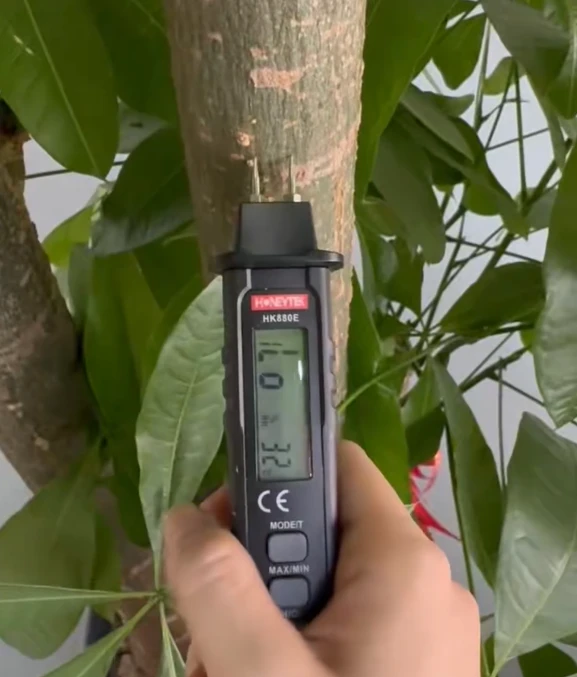
1. Pin Moisture Meters:
A pin moisture meter uses two metal pins that are inserted into the material being measured. The device measures the resistance between the pins, and from that, calculates the moisture content.
Advantages:
- High Accuracy: Pin moisture meters provide a more accurate and localized measurement because they test the moisture content directly where the pins are inserted.
- Cost-Effective: Pin-type meters are generally more affordable than pinless meters.
- Ideal for Small Areas: They are perfect for checking small, specific areas where moisture may be more concentrated.
Disadvantages:
- Invasive Measurement: Pin moisture meters require you to physically insert the pins into the material, which can damage delicate materials such as finished wood or drywall.
- Limited Measurement Depth: The measurement is only as deep as the length of the pins, making them unsuitable for assessing moisture in thicker materials.
2. Pinless Moisture Meters:
Pinless moisture meters, also known as non-invasive or capacitive moisture meters, use electromagnetic sensors to detect moisture without making physical contact with the material.
Advantages:
- Non-Invasive: No holes or damage to materials are caused, making it ideal for use on finished surfaces, walls, or delicate materials.
- Faster Measurements: Provides quick readings over a larger area compared to pin meters.
- Suitable for Thicker Materials: Pinless meters can measure moisture content at a greater depth, making them perfect for assessing larger materials like thick wood, concrete, and drywall.
Disadvantages:
- Lower Accuracy: Although pinless meters are useful for surface-level measurements, they may not provide as accurate results as pin meters, especially when measuring deep moisture content.
- More Expensive: Pinless moisture meters generally come at a higher price point.
When to Use Each Type
- Pin Moisture Meters: Best suited for woodworkers, building inspectors, and restorers who need to measure moisture levels in specific, localized spots. They are perfect for checking the moisture content of lumber, drywall, or other materials in small, well-defined areas.
- Pinless Moisture Meters: Ideal for professionals who require quick, non-invasive readings across larger surfaces. This makes them well-suited for building inspectors, contractors, and restoration professionals who need to assess moisture levels in walls, floors, and ceilings without causing damage.
Why Honeytek’s Digital Moisture Meters Stand Out
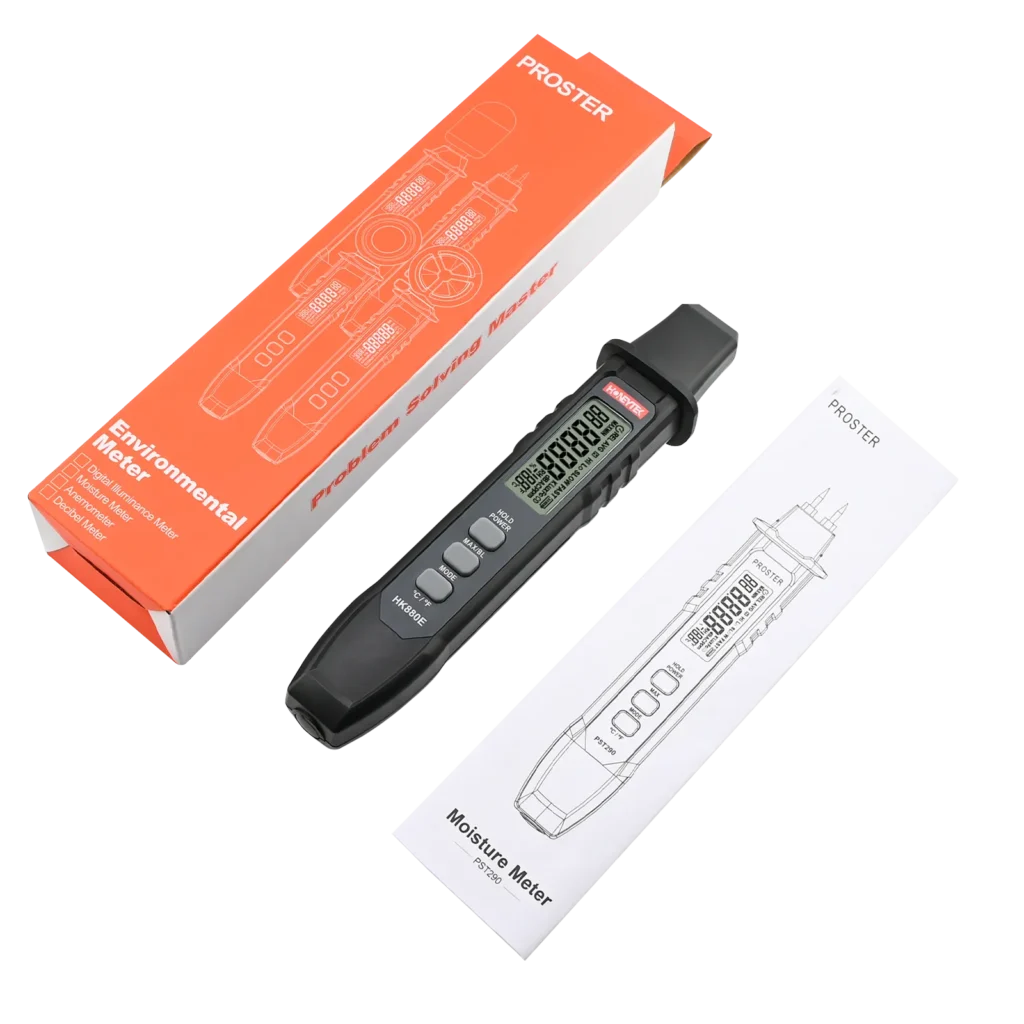
Honeytek, a leading manufacturer of digital multimeters, clamp meters, and other high-precision tools, offers a wide range of digital moisture meters, including both pin and pinless models. Our meters are designed to meet the diverse needs of professionals in the construction, restoration, and woodworking industries.
Honeytek’s moisture meters are durable, reliable, and accurate. We provide OEM/ODM customization to ensure that our products meet the specific requirements of our customers. Whether you need a pin or pinless moisture meter, Honeytek delivers the tools you need to get the job done efficiently and accurately.
FAQ (Frequently Asked Questions)
Q1: Can I use a pinless moisture meter for wood?
Yes, pinless moisture meters can be used for wood, but they may not provide as accurate results as a pin meter, especially for thick or dense wood types. Pin meters are preferred when precise moisture content readings are needed.
Q2: How deep can a pinless moisture meter measure?
Pinless moisture meters are typically effective up to ¾ inch to 1 inch in depth, depending on the material. For deeper measurements, pin moisture meters may be more suitable.
Q3: Are Honeytek moisture meters easy to use?
Yes, Honeytek’s moisture meters are designed with an intuitive interface, clear digital displays, and simple-to-understand readings. They are user-friendly and perfect for both professionals and beginners.
Q4: Is there a risk of damaging materials when using a pin moisture meter?
Yes, pin moisture meters can leave small holes in materials, especially in finished surfaces. However, they are highly accurate, making them ideal for situations where pinpointing specific moisture levels is necessary.
Q5: Can I use Honeytek moisture meters in high-humidity environments?
Yes, Honeytek moisture meters are designed to operate in a wide range of environmental conditions, including high-humidity environments, making them perfect for use in construction, restoration, and inspection tasks.
Whether you need a pin or pinless moisture meter, Honeytek offers the perfect solution for your professional needs. Our meters are designed to provide accurate, reliable readings while ensuring ease of use and durability.
Get in touch today to learn more about our OEM/ODM customization options and become a global distributor of Honeytek’s digital moisture meters. Protect your materials, enhance your workflow, and ensure quality with Honeytek’s high-precision moisture meters.
You May Also Be Interested In:
- HK880A 9999CMM 2 times/sec Digital Anemometer
- HK820 Digital Anemometer with Air Velocity & Temp
- HK820+ 9999 CMM Digital Anemometer
- HK830 Digital Temperature Meter with Ambient Humidity
- HK880C Digital Thermo-hygrometer with 6-digit LCD
- HK880D Digital Gas Leak Detector
- HK880F Digital Sound Level Meter with Temperature Monitoring
- A8850 Digital Sound Level Meter
