
Advanced Features for Professional Applications
Honeytek, a leading manufacturer of industrial measurement tools and instruments, has developed the HK505 insulation tester specifically for demanding professional applications requiring the highest levels of accuracy and safety.
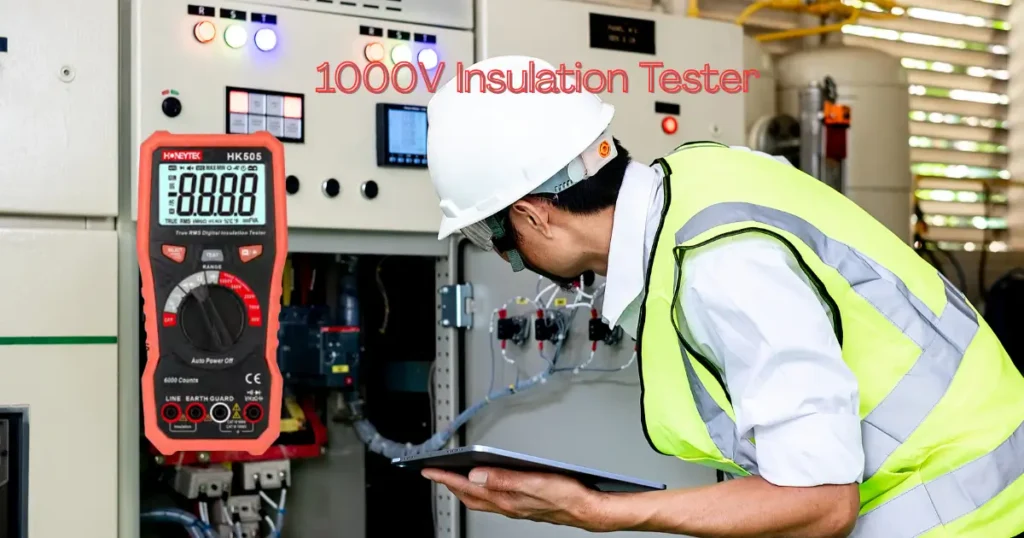
Technical Specifications:
- 6000 Count Display: High-resolution measurements with True RMS capability for accurate AC measurements
- Multi-Voltage Testing: Selectable test voltages of 50V, 100V, 250V, 500V, and 1000V accommodate diverse application requirements
- Extended Measurement Range: Up to 50.0 GΩ resistance measurement capability handles even the most challenging insulation testing scenarios
- Advanced Diagnostics: Built-in Polarization Index (PI) and Dielectric Absorption Ratio (DAR) functions provide comprehensive insulation assessment
Professional Measurement Capabilities:
- Precision AC/DC Measurement: 1000V AC/DC measurement capability with professional accuracy specifications
- Resistance Testing: Up to 60 MΩ resistance measurement for comprehensive electrical testing
- Capacitance Measurement: Up to 10 mF capacitance testing for complete electrical characterization
- Frequency Analysis: Up to 1000 Hz frequency measurement for power quality assessment
Practical Design Features:
- Built-in Flashlight: Integrated illumination ensures visibility in challenging work environments
- Ergonomic Interface: User-friendly controls reduce operator fatigue during extended testing sessions
- Rugged Construction: Industrial-grade housing withstands demanding field conditions
- Safety Integration: Comprehensive safety features meet international standards for operator protection
Best Practices for Different Testing Applications
Electrical Motor Testing
Motor insulation testing requires specific techniques to ensure accurate assessment of winding condition and inter-turn insulation integrity.
Motor Testing Protocol:
- Temperature Correction: Record winding temperature and apply appropriate correction factors
- Connection Configuration: Test each winding independently and between windings
- Extended Testing: Use 10-minute test periods for accurate PI calculations
- Trending Analysis: Compare results with historical data to identify degradation trends
Cable and Wiring System Testing
Underground cables and building wiring systems present unique challenges requiring specialized testing approaches.
Cable Testing Considerations:
- Length Compensation: Account for cable length effects on resistance measurements
- Shielding Verification: Test shield continuity and isolation separately
- Joint Integrity: Pay special attention to splice and termination areas
- Environmental Factors: Consider soil conditions and moisture effects on underground cables
Transformer and Switchgear Testing
High-value electrical equipment requires comprehensive testing protocols to prevent catastrophic failures and ensure operational reliability.
Transformer Testing Approach:
- Winding Isolation: Test primary-to-secondary and winding-to-ground insulation
- Oil Quality Assessment: Coordinate insulation testing with oil dielectric testing
- Tap Changer Evaluation: Include tap changer insulation in comprehensive assessment
- Cooling System Integration: Consider cooling system effects on insulation temperature
Emergency Procedures and Incident Response
Electrical Shock Response
Despite comprehensive safety measures, electrical incidents can occur during high-voltage testing operations. Immediate, appropriate response can prevent serious injury or fatality.
Emergency Response Protocol:
- Scene Safety: Ensure electrical hazard elimination before approaching victim
- Medical Assessment: Check consciousness, breathing, and pulse immediately
- Emergency Services: Contact emergency medical services while providing first aid
- Incident Documentation: Record all details for investigation and prevention efforts
Equipment Failure Management
Instrument failures during testing can create unexpected hazards requiring immediate response to protect personnel and equipment.
Failure Response Procedures:
- Immediate Isolation: Remove test connections and secure electrical sources
- Area Evacuation: Clear unnecessary personnel from potential hazard zones
- Equipment Quarantine: Prevent use of failed equipment until proper inspection
- Investigation Protocol: Document failure mode and contributing factors
Training and Competency Development
Professional Certification Requirements
Safe operation of 1000V insulation testers requires formal training and ongoing competency maintenance to ensure consistent safety performance.
Training Components:
- Electrical Theory: Understanding of insulation principles and failure mechanisms
- Safety Procedures: Comprehensive knowledge of PPE requirements and emergency procedures
- Equipment Operation: Hands-on experience with specific instrument features and capabilities
- Regulatory Compliance: Knowledge of applicable codes, standards, and regulations
Ongoing Professional Development: Technology advances and changing regulations require continuous learning to maintain competency. Professional technicians participate in regular training updates, manufacturer workshops, and industry conferences to stay current with best practices and emerging technologies.
Ready to Enhance Your Electrical Testing Capabilities?
Professional insulation testing demands the right combination of knowledge, safety procedures, and reliable instrumentation. The information presented in this guide provides the foundation for safe, effective testing operations that protect both personnel and equipment while delivering accurate, reliable results.
Take the Next Step in Professional Testing:
✓ Assess Your Current Safety Procedures – Review existing protocols against the comprehensive standards outlined in this guide
✓ Upgrade Your Testing Equipment – Consider advanced instruments like the Honeytek HK505 that combine safety, accuracy, and professional features
✓ Invest in Professional Training – Ensure all testing personnel receive proper certification and ongoing education
✓ Implement Documentation Systems – Establish comprehensive record-keeping for compliance and quality assurance
✓ Schedule Regular Equipment Calibration – Maintain instrument accuracy through proper calibration management
Contact Honeytek Today for expert consultation on selecting the right insulation testing equipment for your specific applications. As a leading manufacturer of industrial measurement tools and instruments, Honeytek provides not only superior products but also the technical support and training resources needed for successful implementation.
Don’t compromise on safety or accuracy in your electrical testing operations. The cost of proper equipment and training represents a small fraction of the potential consequences of electrical failures or safety incidents. Make the professional choice for reliable, safe, and accurate insulation testing.
Get Started Today: Contact your authorized Honeytek distributor to learn more about the HK505 and other professional testing solutions designed for the most demanding applications.
