
In today’s electrical and electronic environments, waveforms are rarely the clean sinusoids of the past. Whether you’re servicing industrial drives, renewable energy systems, LED lighting, or modern controls, the need for accuracy in measuring distorted waveforms is real. A high-precision True RMS multimeter becomes indispensable in such cases.
Industrial Variable Frequency Drives (VFDs) and Motor Drives
Why this scenario demands True RMS
In industrial automation settings, motor controls and drives often use variable-frequency drives (VFDs) that generate non-sinusoidal output currents. These outputs contain harmonics, chopped waveforms and switching transients. Standard RMS (average-responding) meters assume a sine wave and can mis-read by large margins — sometimes under-reading by up to 40%.
A True RMS meter samples the actual waveform, squares values, averages and takes the square root — giving the correct heating-effect equivalent value. Fluke Corporation+1
Typical use-cases
- Measuring current drawn by a VFD-driven motor.
- Checking output voltage of the drive for waveform distortion.
- Predicting thermal stress on motor windings and cabling due to harmonic current.
- Validating correct load sizing and ensuring distribution wiring is not overloaded by harmonic-rich currents.
What features to prioritise
- Wide AC bandwidth (to capture switching and harmonic components).
- High crest-factor handling (for pulses and peaks).
- True RMS specification covering the relevant frequency range (e.g., 50 Hz to several kHz).
- Safety rating appropriate for industrial power circuits (CAT III/IV).
Renewable Energy & Solar-Inverter Systems
Why this scenario demands True RMS
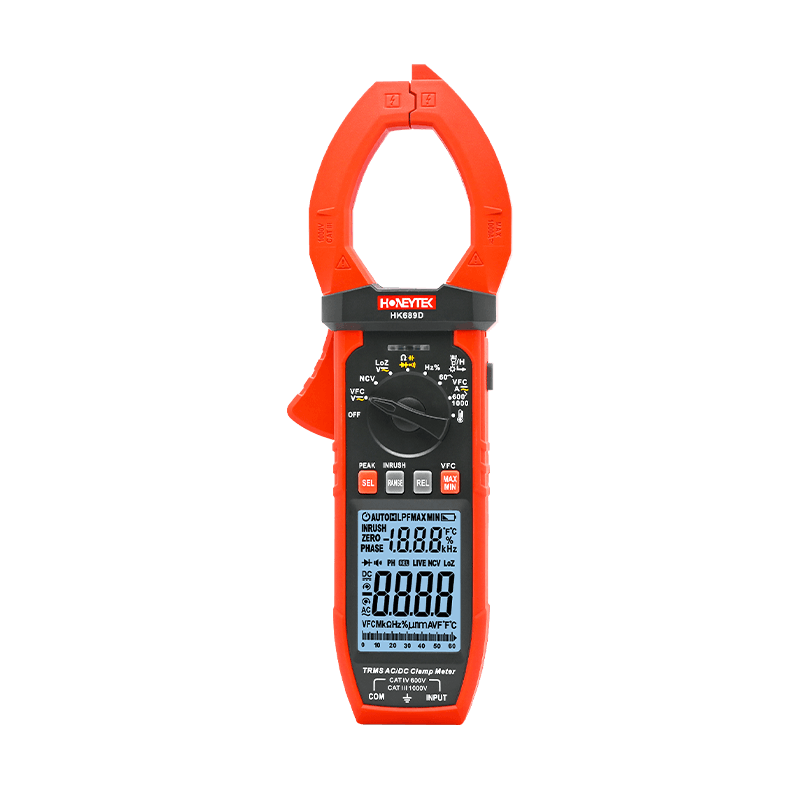
With the rise of solar inverters, battery storage systems and grid-tie installations, the waveforms you encounter are far from ideal. Inverters often produce modified sine, square or complex PWM shapes. As noted by instrumentation sources: “Only a true-RMS meter can accurately measure both sinusoidal and non-sinusoidal waves.” 罗克韦尔自动化
If you use a standard RMS meter, you may mis-interpret voltages/currents, underestimate power delivery or fail to detect issues in the inverter’s output.
Typical use-cases
- Measuring AC output of a photovoltaic inverter.
- Assessing ripple and distortion in battery-backup systems.
- Monitoring load current from hybrid inverters and micro-grids.
- Checking quality of power feeding from renewable sources into mains.
What features to prioritise
- True RMS capability explicitly stated for AC + DC or AC alone.
- Frequency range including higher than mains (e.g., up to 400 Hz or more) for inverter outputs.
- Data logging/trend capture for long-term monitoring of renewable output quality.
- Robust safety rating for solar input/output circuits (often outdoor/hazardous).
Electronics & Switching Power Supplies (SMPS), LED Drivers, PWM Circuits
Why this scenario demands True RMS
In electronics labs or service centres, many circuits feature switching power supplies, LED drivers or PWM-based regulation. These produce rapid transient pulses, non-linear current draw and high harmonic content. A standard meter may read inaccurately in these conditions — instrumentation commentary confirms: “Monitoring distorted waveforms … requires TRMS for accuracy.”
Using a True RMS meter is essential to ensure you’re measuring actual effective current/voltage — especially where thermal or reliability concerns are involved.

Typical use-cases
- Measuring current drawn by computer motherboards, power supplies or factory automation boards.
- Inspecting LED lighting drivers for input-current distortion or ripple.
- Validating compliance and power-quality in telecom, data-centre or embedded-systems environments.
- Diagnosing board-level faults where distorted waveforms may hide in standard RMS readings.
What features to prioritise
- High sampling rate and bandwidth to capture fast transients and pulses.
- Measurement of both AC and DC components (AC + DC True RMS) if mixed waveform is present. Fluke Corporation
- Ability to measure small currents accurately (µA to A) with True RMS behaviour.
- Logging/trend features for seeing waveform behaviour over time.
Power Quality Analysis in Commercial and Industrial Installations
Why this scenario demands True RMS
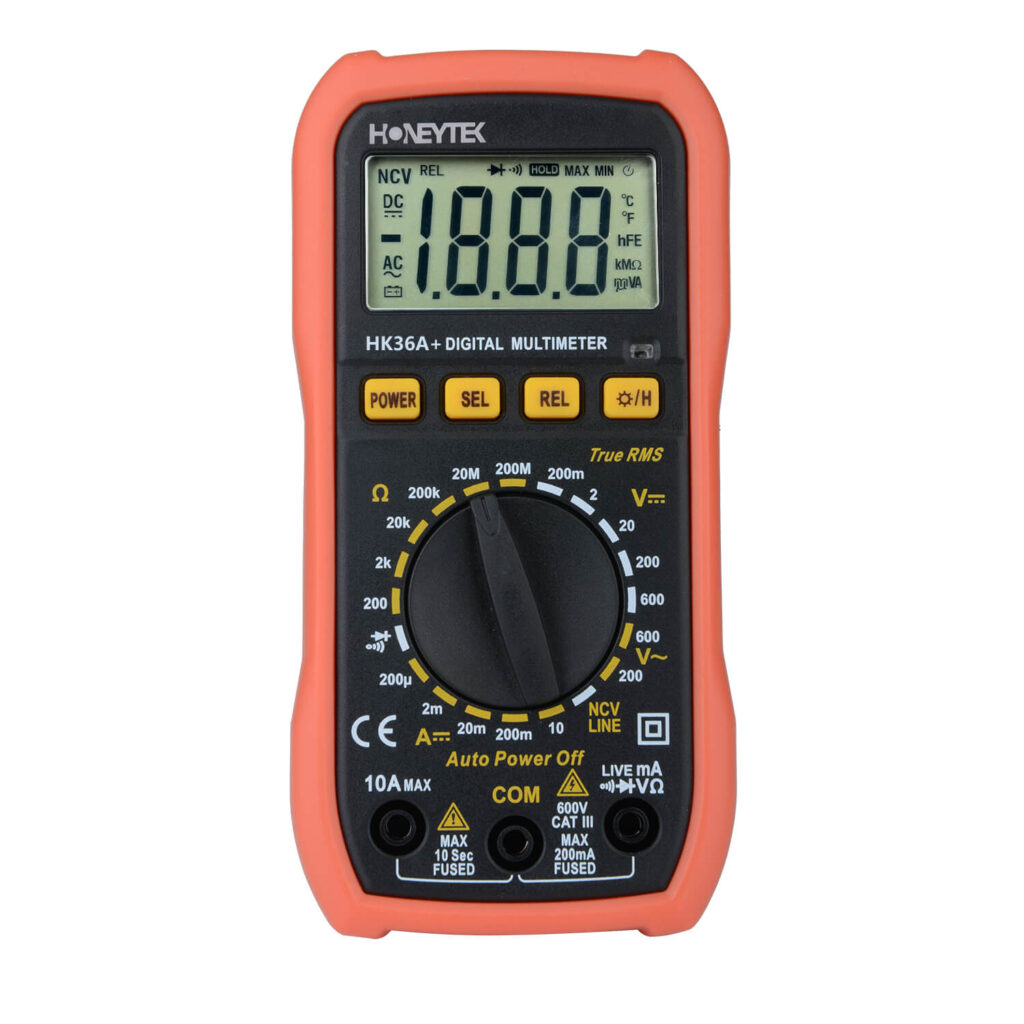
Power-quality issues — harmonics, flicker, transient spikes — are increasingly important in large installations, data centres, hospitals, labs and industrial plants. Accurate measurement of voltage and current RMS under distorted conditions is vital for compliance, safety and reliability. As one article states: “In environments where non-sinusoidal waveforms are prevalent … True RMS is indispensable.”
A meter lacking True RMS may mis-read, leading to wrong conclusions about load balance, harmonic health or power-factor correction.
Typical use-cases
- Checking voltage/current at a distribution panel feeding many PWM loads.
- Measuring harmonic currents in heavy motor-driven equipment.
- Validating compliance with standards (IEEE, IEC) for power quality.
- Diagnosing unexplained equipment overheating or erratic behaviour possibly caused by waveform distortion.
What features to prioritise
- Bandwidth sufficient to capture significant harmonics (often up to several kHz).
- True RMS rating with specified accuracy under distorted and high–crest-factor waveforms.
- Data-logging and trend analysis for long-term monitoring or reporting.
- Safety rating appropriate for power distribution panels (CAT III/IV).
Automotive & Electric Vehicle (EV) Systems
Why this scenario demands True RMS
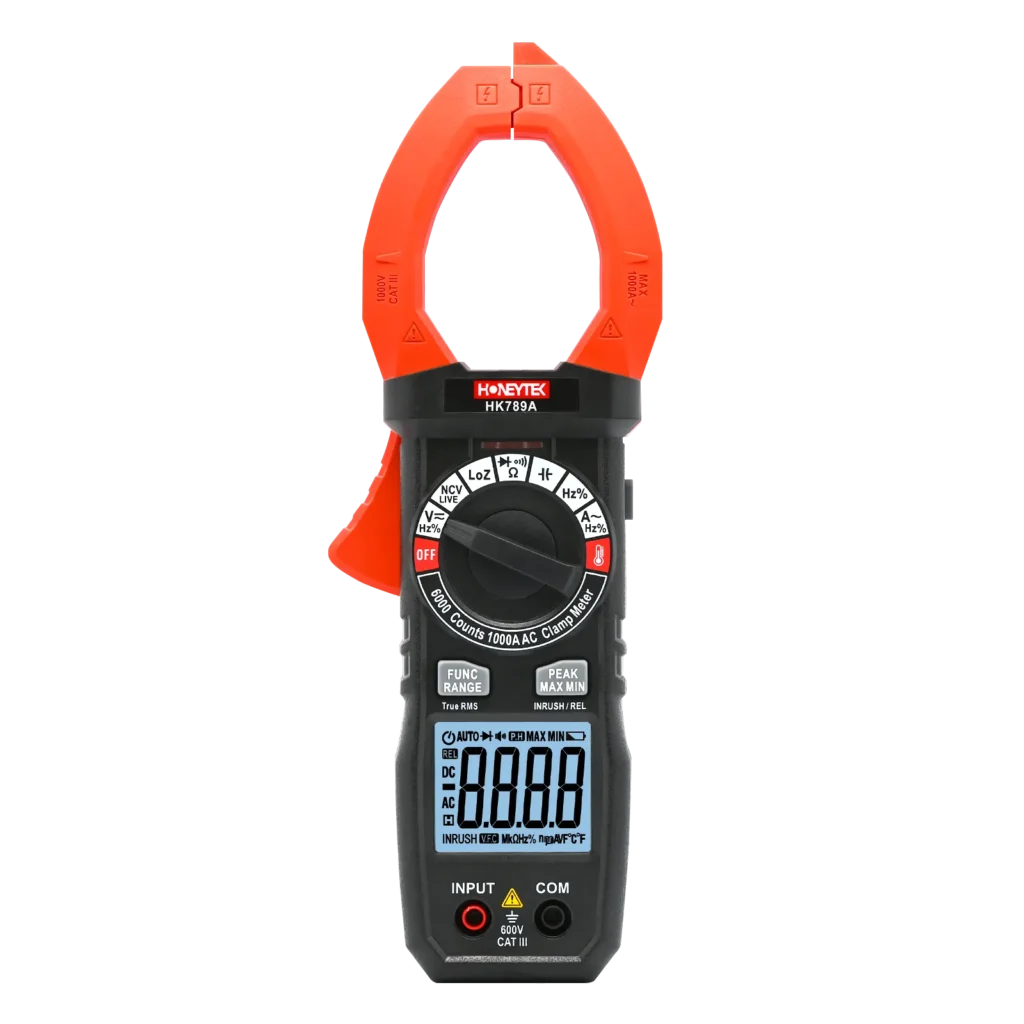
Modern vehicles increasingly rely on power-electronics, high-frequency converters, and PWM inverters (especially EVs/hybrids). These generate rapidly switching currents and complex waveforms where a standard meter will fail to capture the true effective values. One guide specifically highlights automotive systems under PWM as a key area for True RMS meters.
Accurate measurement is critical for diagnosing ripple, inverter failures, hybrid battery systems, and high-speed switching loads.
Typical use-cases
- Measuring inverter and converter output in hybrid/EV systems.
- Checking alternator ripple, high-frequency switching faults in battery-electric vehicles.
- Diagnosing PWM motor-drive systems in electric vehicles or advanced automotive subsystems.
What features to prioritise
- True RMS capability in the presence of high crest factors.
- AC + DC measurement capability for mixed waveforms (common in EV subsystems).
- Robust construction for automotive/workshop environments (rugged housing, shock-proof).
- Safety rating for high-voltage automotive systems (often > 300 V DC).
When to Choose a High-Precision True RMS Multimeter
If your measurement tasks include any of the following, you should deploy a high-precision True RMS multimeter:
- Non-sinusoidal waveforms: VFDs, inverter drives, PWM loads
- Switching-power electronics: SMPS, LED drivers, data-centre power systems
- Power-quality work: harmonic measurement, distribution panels, industrial loads
- Renewable energy: solar inverters, hybrid systems, battery storage
- Automotive/EV: inverter/rectifier assessment, high-frequency switching measurement
Conversely, if you’re strictly working with clean mains sine waves and purely resistive loads (e.g., simple lighting, linear loads), an average-responding meter may suffice. But given how rapidly loads are evolving, investing in a True RMS meter is a way to future-proof your toolkit.
Frequently Asked Questions (FAQ)
Q1: What makes a multimeter “True RMS” rather than average-responding?
A1: A True RMS unit measures the actual waveform by sampling the instantaneous values, squaring them, averaging and taking the square root. This allows accurate measurement of non-sinusoidal waveforms. An average-responding meter assumes a pure sine wave and applies a conversion factor—leading to errors under distortion.
Q2: How much error can a non-True RMS meter introduce?
A2: In distorted waveform conditions, errors may reach up to 40% low or 10% high compared to true heating-value measurement.
Q3: For purely mains-sine measurements, is True RMS mandatory?
A3: If you’re sure the waveform is a clean sine wave and loads are linear, a standard meter may suffice. However, many modern mains circuits include non-linear loads and distortions — so True RMS is safer and future-proof.
Q4: What should I look for when buying a True RMS meter for these scenarios?
A4: Prioritise: True RMS label, wide AC bandwidth, high sampling rate, high crest factor rating, accurate AC/AC+DC specs, proper safety rating for your environment (CAT III/IV), data-logging if needed.
Q5: Why include data logging or trend capture in my meter choice?
A5: In power-quality, renewable energy or dynamic systems, issues may occur intermittently or over time. A meter with logging/trend capability helps you capture these transient events and produce meaningful reports.
If your work involves any of the above scenarios — industrial drives, renewable systems, switching electronics, automotive inverter diagnosis or power quality analysis — you owe it to yourself to use a high-precision True RMS multimeter.
Discover Honeytek’s line of True RMS digital multimeters and clamp meters today. Compare models, examine bandwidth and accuracy specifications, and choose the model that aligns with your application and future-proofs your measurement toolkit.
