
Introduction
The solar power industry is evolving rapidly. Utility-scale and commercial photovoltaic (PV) systems are no longer limited to 1000V installations. Instead, 1500V systems are becoming the new standard, offering higher efficiency and lower overall costs.
However, with these advantages comes an important consideration: safety in measurement and maintenance. As voltages and transient overvoltages increase, technicians and engineers require advanced tools designed to withstand these challenging environments.
This article explains why PV system voltages are rising, what transient overvoltages are, and how Honeytek’s clamp meters and multimeters provide the safety, reliability, and precision needed for solar professionals.
Why PV System Voltages Are Increasing
1. Improving Power Transmission Efficiency
In solar power generation, reducing energy losses during transmission is critical. When current is high, power loss in cables and connectors increases. By raising system voltage from 1000V to 1500V, engineers can reduce current levels while transmitting the same amount of power.
This higher voltage allows for:
- Lower energy loss in transmission lines.
- Better utilization of generated power.
- Higher overall efficiency of the PV plant.
2. Cost Savings in Large PV Systems
Switching to 1500V PV systems is not just about efficiency—it’s also about reducing cost. Compared to 1000V systems:
- The number of PV module strings can be reduced by up to 75%.
- Fewer combiner boxes and inverters are required.
- Cable lengths are reduced, lowering installation and material costs.
For large projects like a 1000kW solar power station, these savings are significant. This is why 1500V systems are rapidly replacing 1000V installations as the preferred option worldwide.
The Challenge of Higher Voltages: Safety and Overvoltages
As voltages increase, so do the risks associated with measurement, inspection, and maintenance.
PV Module Measurement Categories (CAT Ratings)
International safety standards such as EN61010 and IEC 61730-1 define measurement categories (CAT II, CAT III, CAT IV) based on operating voltage, current capacity, and expected transient overvoltages.
- CAT II: Local appliances and small loads.
- CAT III: Distribution systems, including PV modules.
- CAT IV: Main supply lines and high-energy systems.
Since PV modules are classified as CAT III, instruments used for measurement must be designed to withstand high transient overvoltages in such environments.
Expected Transient Overvoltages in PV Systems
Transient overvoltage, also known as impulse voltage, refers to sudden spikes that can occur in power lines due to lightning strikes, switching operations, or other disturbances.
In industrial environments, these surges can reach up to 10 times the supply voltage. For a 1500V PV system, transient overvoltages can reach 10,000V or more.
Without the right measuring instruments, technicians risk both equipment damage and personal injury.
Honeytek Measurement Solutions for High-Voltage PV Systems
Honeytek, a trusted manufacturer of electronic measurement tools, designs products specifically for modern high-voltage solar applications. Below are three solutions that address the challenges of working with 1500V PV systems and transient overvoltages.
1. Honeytek HK888D – 2000A AC/DC Clamp Meter

The Honeytek HK888D is built for large-scale PV installations.
Key Features:
- Current ranges: 600A and 2000A for both AC and DC.
- High-voltage capability: Compatible with CAT III 2000V environments.
- Equipped with a DC high-voltage probe, ensuring safe and accurate measurements even under extreme transient conditions up to 15,000V.
Benefits for PV Professionals:
- Wide measurement range, suitable for everything from small solar arrays to utility-scale projects.
- Robust safety design for high-voltage applications.
- Reliable performance in demanding field conditions.
2. Honeytek HK789D – 1000A AC/DC Clamp Meter
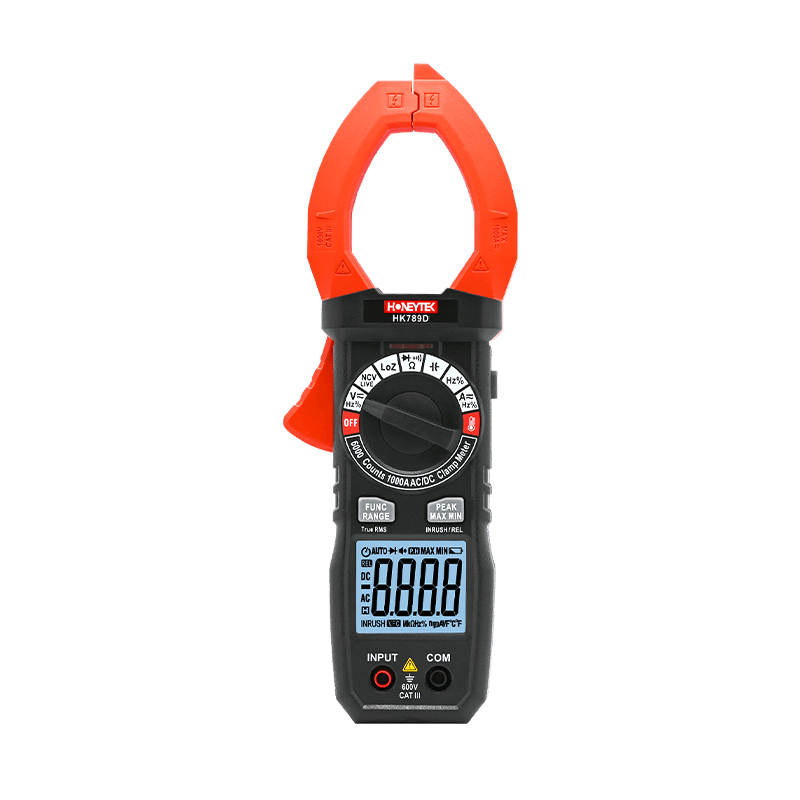
The HK789D combines safety with ergonomic design, making it ideal for crowded solar installations.
Key Features:
- Slim clamp jaws for easy use in tight, narrow spaces.
- Automatic AC/DC detection – no need to switch ranges manually.
- Capable of measuring both current and voltage efficiently.
Benefits for PV Professionals:
- Saves time and increases efficiency during inspection.
- Flexible enough for both routine checks and detailed diagnostics.
- Compact design makes it ideal for field engineers working in challenging environments.
3. Honeytek HK78G – 2000V TRMS Auto-Range Digital Multimeter

For portable, everyday PV system checks, the HK78G multimeter is a lightweight yet powerful option.
Key Features:
- 2000V True RMS auto-range measurement.
- Outdoor-friendly design with terminal protection to prevent mis-wiring.
- Compact and single-hand operation.
- Can be paired with the HK19A Current Clamp Probe (optional) for added flexibility.
Benefits for PV Professionals:
- Highly portable for use in large solar fields.
- Enhanced safety with mis-insertion prevention.
- Reduces workload by combining accuracy with ease of use.
The Future of PV Measurement Tools
As PV systems continue to scale up beyond 1500V, the demand for measurement tools capable of handling even higher voltages will grow. Honeytek is committed to developing innovative solutions that ensure safety, reliability, and precision in these future applications.
For technicians and engineers working in solar energy, choosing the right tools is not just a matter of efficiency—it’s a matter of safety.
FAQs About PV System Measurement and Safety
Q1: Why are PV systems moving from 1000V to 1500V?
A: To reduce power losses during transmission and lower system costs by reducing the number of components and cable lengths.
Q2: What is transient overvoltage in PV systems?
A: Transient overvoltage is a sudden surge (such as from lightning or switching) that can exceed 10 times the supply voltage, posing serious risks to both equipment and personnel.
Q3: What measurement category (CAT) applies to PV modules?
A: PV modules are classified as CAT III, meaning instruments must withstand high transient overvoltages expected in distribution systems.
Q4: Why is a CAT III 2000V rating important for PV measurement tools?
A: Because 1500V PV systems can experience transient overvoltages up to 10,000V, instruments must be designed to endure such spikes safely.
Q5: Which Honeytek tools are recommended for high-voltage PV systems?
A:
- HK888D Clamp Meter: For large-scale systems requiring wide current ranges.
- HK789D Clamp Meter: For narrow spaces and automatic AC/DC detection.
- HK78G Multimeter: For portable, everyday measurements up to 2000V.
Conclusion: Safety Meets Efficiency in PV System Measurements
The shift toward 1500V PV systems is transforming the solar industry with higher efficiency and lower costs. But with higher voltages come higher risks, especially from transient overvoltages.
To keep pace, solar professionals must rely on advanced, safety-rated instruments designed for these demanding environments. Honeytek’s range of clamp meters and digital multimeters provides the ideal balance of accuracy, safety, and reliability.
Are you ready to equip your team with the right tools for the next generation of solar energy systems?
Explore Honeytek’s full range of clamp meters and digital multimeters today and ensure safe, efficient measurements in every PV project.
Contact Honeytek Now to learn more about our solutions for high-voltage solar applications.
