
A multimeter is one of the most essential tools in the world of automotive repair and troubleshooting. Whether you are a professional mechanic or a car enthusiast, it provides accurate measurements that form the foundation of electrical system diagnostics. This guide will explore its key functions, applications, and tips for selecting the right model for your needs.
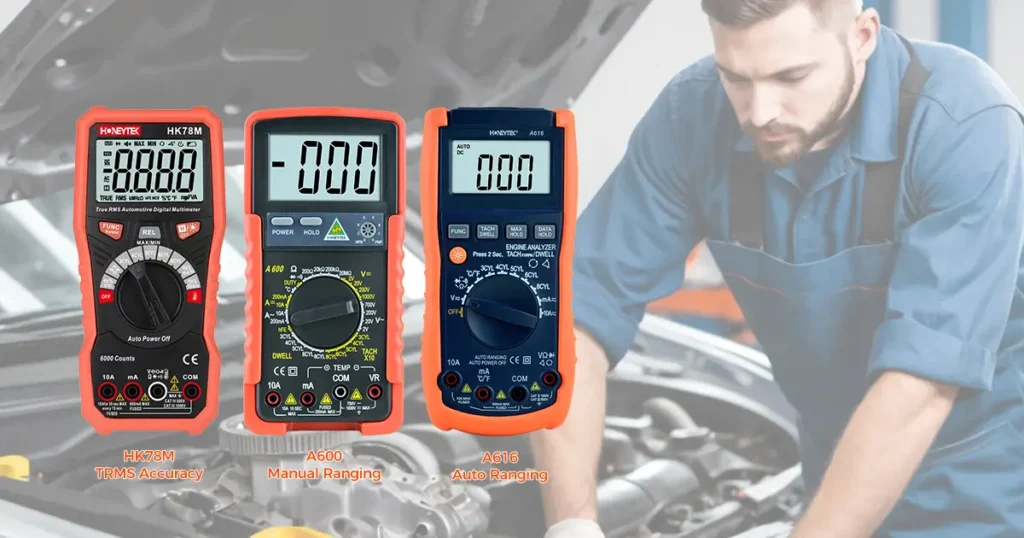
Why a Multimeter Is Essential for Car Diagnostics
Modern vehicles rely heavily on electrical and electronic systems. From engine control modules to sensor arrays, accurate measurements are crucial for identifying faults and ensuring optimal performance. A reliable automotive multimeter can test voltage, current, resistance, and even specialized parameters like RPM, duty cycle, and temperature.
1. Basic Electrical Parameter Testing
Voltage Measurement
One of the most common uses of a multimeter in automotive work is checking battery and charging system voltage.
- Battery health check: A healthy, fully charged battery should read 12.6V or higher at rest.
- Charging system test: With the engine running, voltage should typically be 13.8V–14.7V, indicating the alternator is functioning properly.
- Sensor voltage checks: Used to verify signal voltages from various automotive sensors.
Current Measurement
Measuring current helps in diagnosing high-load conditions or tracking down parasitic drains. Common uses include:
- Starter motor current draw
- Alternator output current
- Load current for electrical accessories
Resistance Measurement
Resistance testing is valuable for identifying broken wires, failing components, or degraded ignition coils. Examples include:
- Checking ignition coil resistance
- Testing sensor resistance values
- Diagnosing short or open circuits
2. Automotive Electrical System Diagnostics
Fault Location
By comparing readings at different points in a circuit, you can pinpoint the location of faults in wiring or components.
Continuity Testing
The continuity function, often combined with an audible buzzer, allows quick checks of fuses, switches, relays, and wiring.
Diode and Transistor Testing
Some multimeters feature a diode test mode for verifying the forward and reverse bias characteristics of electronic components.
3. Features of Dedicated Automotive Multimeters
Unlike general-purpose meters, automotive-specific multimeters are designed for the unique demands of vehicle diagnostics. Common features include:
- High impedance input to protect sensitive electronic control units (ECUs)
- Frequency measurement for checking ignition systems and speed sensors
- RPM and dwell angle measurement for engine tuning
- Duty cycle and pulse width measurement for injector and ignition analysis
- Temperature probes for engine, exhaust, or cabin temperature readings
- Optional OBD interface for reading certain fault codes directly
4. Practical Applications in Automotive Repair
Starting System Testing
Measure voltage drop across battery cables, starter terminals, and ground points to identify high resistance or failing components.
Sensor Diagnostics
Check the output signals of oxygen sensors, throttle position sensors, and coolant temperature sensors to confirm they’re working within specification.
Engine Performance Analysis
Use the multimeter to measure injector pulse width, ignition coil resistance, spark plug continuity, and average engine RPM.
5. Choosing and Using a Multimeter for Automotive Work
Selection Tips
- Choose a high-impedance digital multimeter to prevent damage to sensitive electronics.
- Look for models with automotive-specific functions if you work on modern vehicles.
- Ensure it meets relevant safety categories, such as CAT III 600V for automotive environments.
Safety Precautions
- Follow the manufacturer’s safety guidelines.
- Avoid short circuits and incorrect polarity connections.
- Use insulated probes and wear appropriate protective gear.
Conclusion
A multimeter is indispensable for diagnosing and maintaining modern vehicles. From basic battery checks to advanced sensor analysis, it provides the precision and versatility required by today’s automotive professionals. By choosing the right model and using it correctly, you can improve diagnostic accuracy, reduce repair times, and keep vehicles running at their best.
