
Introduction
Electrical safety and efficiency are critical in residential, commercial, and industrial power systems. One of the most common challenges faced by electricians is diagnosing leakage currents, which may lead to electric shocks, fire hazards, or unwanted tripping of protective devices. Another hidden issue is electricity theft, which not only causes financial loss but can also damage electrical infrastructure.
The leakage current clamp meter is one of the most effective tools to address these challenges. It allows electricians to measure leakage currents without disconnecting the circuit, ensuring faster troubleshooting and safer operations. In this article, we’ll explore how to use a leakage current clamp meter for leakage detection, electricity theft investigation, and safe operation practices.
What is a Leakage Current Clamp Meter?
A leakage current clamp meter is a specialized type of clamp meter designed to measure small residual currents flowing through conductors. Unlike standard clamp meters that measure load current, leakage current clamp meters are highly sensitive and can detect currents in the milliampere (mA) range.
These instruments are widely used in:
- Diagnosing residual current device (RCD) performance.
- Locating insulation faults in low-voltage distribution systems.
- Identifying leakage paths in underground or embedded wiring.
- Detecting electricity theft cases (e.g., “one wire to ground” theft methods).
Step-by-Step Applications of Leakage Current Clamp Meters
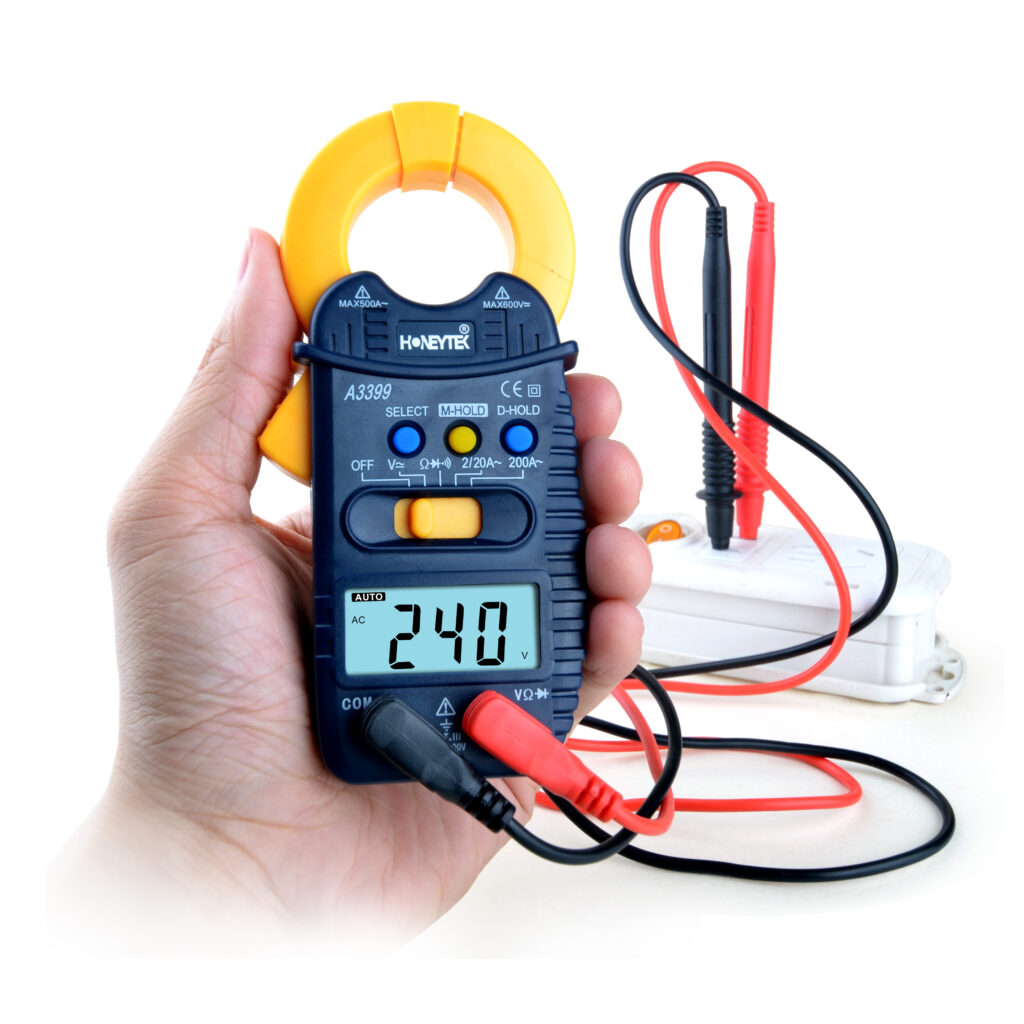
1. Testing Residual Current Devices (RCDs)
If an RCD (or residual current circuit breaker) frequently trips or fails to operate:
- Clamp the meter around all three phase lines and the neutral line at the output side of the circuit breaker.
- Force the RCD to operate.
- If the clamp meter reading is above 300 mA, the RCD is working correctly, and leakage exists in the circuit.
- If the reading is below this value, the RCD itself may be faulty and requires repair or replacement.
2. Identifying Which Phase Has Leakage
To determine which phase conductor is leaking:
- Disconnect the neutral conductor at the low-voltage side of the transformer.
- Install the fuse on one phase, then clamp the leakage meter on that phase.
- Repeat the test for all phases.
- The reading displayed is the leakage current of that phase.
⚠️ Tip: Always start with the maximum range of the clamp meter to avoid damage, then switch to the milliampere range if the current is small.
3. Locating the Leakage Point Along the Line
After identifying the faulty phase:
- Reconnect the fuse to the phase line under test while disconnecting the others.
- Use the clamp meter along the distribution line (starting from the middle of the line for efficiency).
- Compare readings to determine whether the leakage is in the first or second half of the line.
- Narrow down step by step until you identify the faulty insulator, connection point, or customer branch line.
This process is especially effective for overhead lines and rural distribution systems.
4. Checking Customer Premises Wiring and Equipment
Sometimes leakage may come from household appliances or customer wiring:
- Clamp the meter at the service entrance cable of the customer.
- Switch on and off appliances one by one.
- If the leakage current decreases when a device is disconnected, that device is faulty.
- If leakage persists even with all appliances disconnected, the issue lies in the hidden wiring.
In case of embedded wiring (such as conduits inside walls), replacement or rewiring may be the only solution.
5. Detecting Electricity Theft
Electricity theft through illegal connections (e.g., one-wire-to-ground method) is a serious issue. With a leakage clamp meter:
- Clamp the meter on the suspected line.
- If abnormal leakage currents in the range of hundreds of milliamperes or even amperes are detected, it indicates possible theft.
- Follow the inspection process to identify the exact point of illegal tapping.
Safety Considerations When Using a Leakage Clamp Meter
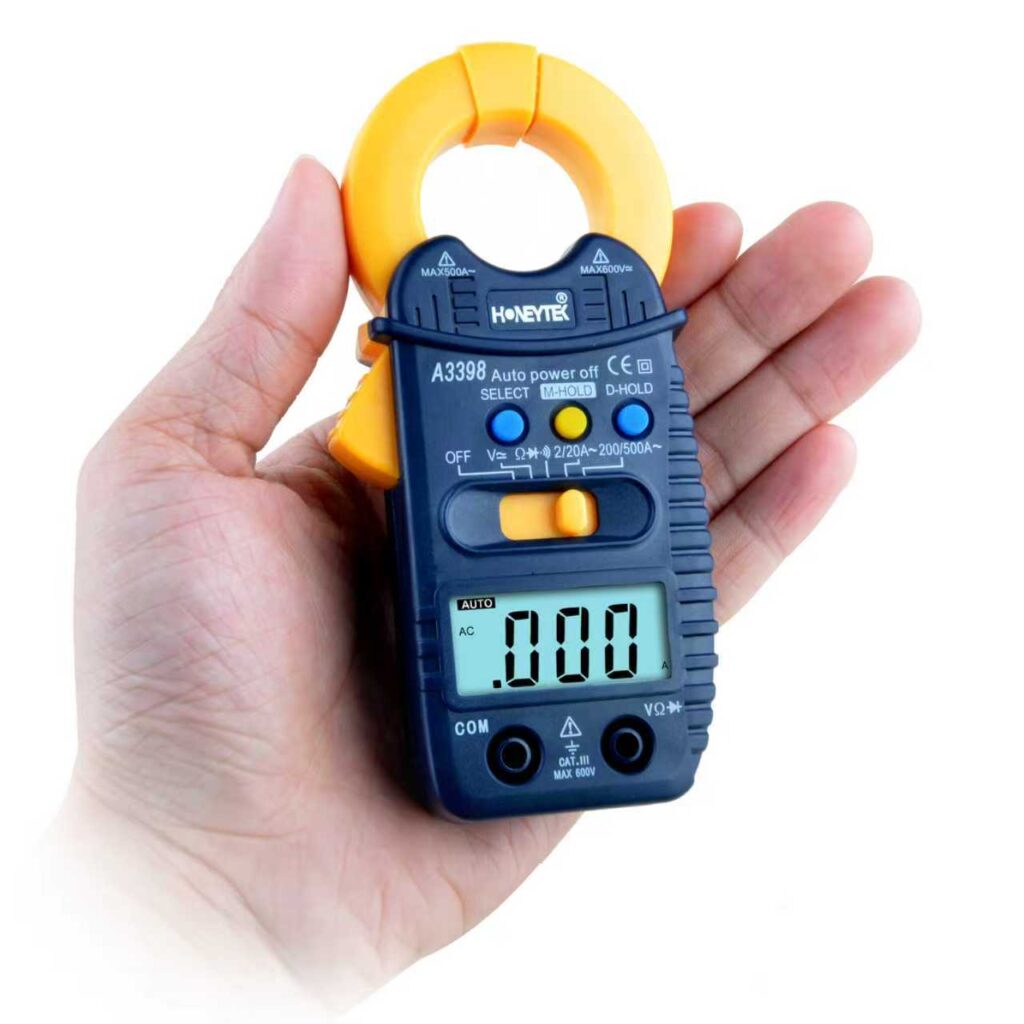
- Short-time forced energization may be required when testing lines. Always follow safety protocols.
- Maintain safe distance from live conductors; use the HOLD function of the meter for safer reading.
- Work with a partner when climbing poles or working in hazardous areas.
- Watch out for harmonic interference, especially in areas with heavy industrial loads such as induction furnaces.
- Always wear proper insulating gloves, boots, and protective gear.
Why Choose Honeytek Leakage Current Clamp Meters?
As an experienced electronic measurement tools manufacturer, Honeytek provides clamp meters designed with:
- High sensitivity for detecting milliampere-level leakage currents.
- Robust safety ratings (CAT II/CAT III) for industrial and residential use.
- Ergonomic design for field electricians and utility maintenance teams.
- Durable construction for reliable long-term performance.
Honeytek’s test instruments are trusted by professionals worldwide for accurate diagnostics and cost-saving maintenance.
FAQs about Leakage Current Clamp Meters
Q1: What is the difference between a standard clamp meter and a leakage clamp meter?
A standard clamp meter measures load current (usually amps), while a leakage clamp meter measures small leakage currents (mA) that flow due to insulation faults or theft.
Q2: Can a leakage clamp meter detect electricity theft?
Yes. It is particularly effective in detecting illegal connections, especially the “one wire to ground” method.
Q3: How often should leakage current testing be performed?
It is recommended to perform regular inspections—monthly in industrial facilities and quarterly in residential or commercial systems.
Q4: What is the safe limit of leakage current?
Generally, leakage currents above 30 mA can pose a risk of electric shock, and protective devices (RCDs) are usually set to trip around this level.
Q5: Can I use a leakage clamp meter on both single-phase and three-phase systems?
Yes. For single-phase, clamp both phase and neutral. For three-phase, clamp all three phases plus neutral to check for imbalance.
Conclusion
Leakage current clamp meters are indispensable tools for modern electricians. From testing RCDs and identifying leakage faults to preventing electricity theft, they ensure safety, efficiency, and fair usage of electricity.
If you are looking for a reliable leakage current clamp meter, Honeytek offers professional-grade solutions trusted by electricians worldwide.
Contact Honeytek today to learn more about our range of electronic measuring instruments and find the right clamp meter for your needs.
