
When choosing a thermal imaging camera, one of the first questions users often ask is:
“Does resolution really matter?”
For anyone who has ever used a thermal camera for inspections, repairs, or diagnostics, the answer is a resounding yes.
Resolution is one of the most critical specifications determining the clarity, accuracy, and usefulness of thermal images. Whether you are inspecting a building, troubleshooting an electrical panel, or repairing electronic devices, the level of detail in your thermal image can make all the difference.
In this article, we’ll explore why resolution matters, how it affects real-world applications, and what you should consider when selecting the right infrared thermal camera for your needs.

Understanding Thermal Camera Resolution
What Is Resolution in Thermal Imaging?
Resolution refers to the number of pixels in the infrared sensor array of a thermal camera — commonly expressed as width × height (for example, 160×120, 320×240, or 640×480). Each pixel captures temperature data from a specific point in the scene, which is then converted into a color-coded thermal image.
Simply put:
- More pixels = more detail
- Higher resolution = sharper and more accurate images
A low-resolution thermal camera might only show general heat areas, while a high-resolution model can reveal the exact component or tiny fault responsible for temperature anomalies.
Why Resolution Is So Important
1. Accuracy and Detail
In thermal imaging, every pixel represents a temperature measurement. A higher number of pixels allows for finer temperature mapping and more precise identification of heat sources.
For example, when diagnosing a printed circuit board (PCB) issue, a high-resolution thermal image can clearly distinguish between adjacent components, helping technicians pinpoint which resistor or capacitor is overheating.
2. Reliable Long-Distance Measurements
Higher resolution also enables accurate temperature readings from greater distances. This is particularly useful in building inspections, electrical grid monitoring, or industrial maintenance, where it’s not always safe or practical to get close to the target.
3. Enhanced Diagnostic Capability
High-resolution images can reveal subtle patterns — like small insulation gaps, micro-leaks, or early-stage electrical faults — that would be missed with low-resolution devices. These fine details allow maintenance teams to detect problems early, saving both time and repair costs.
4. Better Reporting and Documentation
For professionals, especially in construction, HVAC, or inspection services, clear thermal images are essential for generating convincing reports. A sharp, detailed image is far more credible and easier for clients to understand than a blurry, pixelated one.
Resolution Comparison: Low vs. High
| Resolution Level | Typical Application | Advantages | Limitations |
|---|---|---|---|
| 80×60 | Basic temperature checks | Affordable, compact | Limited detail, not suitable for diagnostics |
| 160×120 | Entry-level inspection | Decent balance between price and clarity | May miss small faults |
| 320×240 | Professional maintenance | High detail, reliable diagnostics | Higher cost |
| 640×480 and above | Industrial-grade applications | Exceptional detail, long-distance accuracy | Expensive, larger data files |
When comparing models, resolution is one of the clearest indicators of performance — and often, the primary factor that differentiates consumer-grade cameras from professional tools.
Real-World Applications of High-Resolution Thermal Imaging
1. Electrical and Mechanical Inspection
High-resolution thermal cameras allow technicians to easily identify loose connections, overloaded circuits, or failing motors before they cause breakdowns or fire hazards.
2. Building and Home Inspection
A high-resolution device reveals hidden energy losses, poor insulation, water leaks, and air infiltration around windows or roofs. This level of clarity ensures precise repair planning and improved energy efficiency.
3. Electronics and PCB Repair
When troubleshooting circuit boards, high resolution helps locate miniature components generating excess heat. This makes repair processes faster, safer, and more accurate.
4. HVAC and Plumbing Systems
Detailed thermal imaging enables technicians to trace refrigerant leaks, inspect underfloor heating, and verify proper insulation or duct sealing.
5. Research and Development
In laboratories or engineering environments, high-resolution thermal cameras capture precise thermal gradients, essential for thermal management, material testing, and design optimization.
Balancing Resolution with Budget
While it’s true that higher resolution usually means a higher price, the investment often pays for itself in accuracy, efficiency, and professionalism. For casual users or basic inspections, a 160×120 or 256×192 model may suffice.
However, for professional inspectors, electricians, or engineers, a 320×240 or 640×480 thermal camera provides the level of precision needed for demanding tasks.
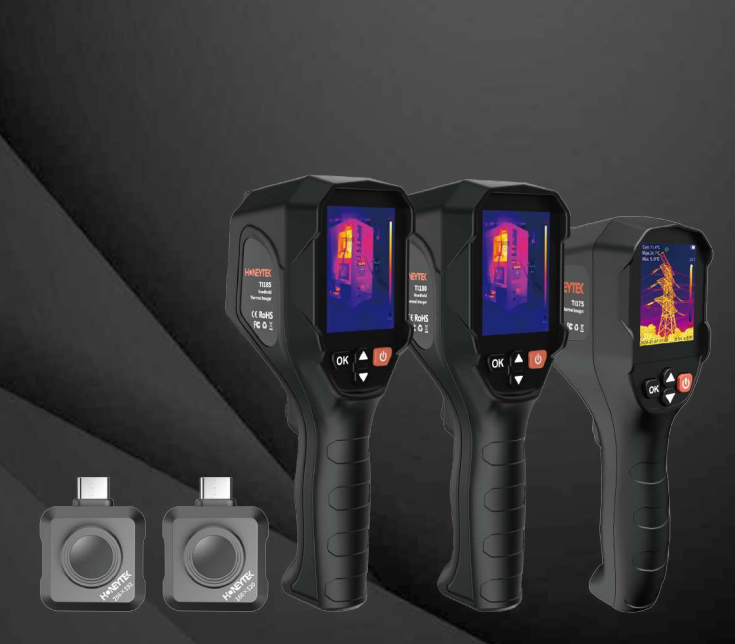
If you’re seeking a balance between performance and affordability, brands like Honeytek offer compact, high-value models such as the TP170 and TP175 Mobile Plug-in Thermal Imaging Cameras. These devices deliver excellent resolution, clear temperature contrast, and easy smartphone integration — perfect for both professionals and enthusiasts.
Honeytek: Precision Thermal Imaging for Professionals
As a trusted electronic measurement tool manufacturer, Honeytek designs and produces a full range of digital multimeters, clamp meters, and thermal imaging cameras for industrial and technical use.
Honeytek’s thermal imaging cameras combine high resolution, fast response, and intuitive operation, making them ideal for applications in:
- Building inspection
- Electrical maintenance
- Electronic repair
- HVAC system testing
- Energy efficiency audits
Each Honeytek product is designed to deliver accurate data, reliable performance, and outstanding value — ensuring users can diagnose problems faster and with greater confidence.
Tips for Choosing the Right Resolution
When selecting your thermal camera, consider these factors:
- Application Type – Building, industrial, or electronic inspection?
- Target Size – The smaller the detail, the higher the resolution required.
- Working Distance – For distant targets, more pixels ensure better clarity.
- Budget and Use Frequency – Invest in higher resolution if thermal imaging is part of your daily workflow.
- Image Enhancement Features – Look for options like MSX (Multi-Spectral Dynamic Imaging) or SuperIR to enhance edge detail.
Frequently Asked Questions (FAQ)
Q1: What resolution should I choose for home inspection?
For general home inspection, a 320×240 resolution camera provides excellent detail to detect leaks, insulation issues, and air gaps.
Q2: Can a low-resolution camera still detect faults?
Yes, it can detect large temperature differences, but fine details (like small leaks or micro-cracks) may be missed.
Q3: How does resolution affect temperature accuracy?
Higher resolution improves accuracy because more data points contribute to each measurement, reducing interpolation errors.
Q4: Do high-resolution cameras work in complete darkness?
Absolutely. Thermal imaging doesn’t rely on visible light — it detects infrared radiation emitted by objects, so it functions perfectly in total darkness.
Q5: Is it worth paying extra for a high-resolution thermal camera?
If you rely on thermal imaging for professional diagnostics or reporting, the answer is yes. The enhanced clarity significantly improves your efficiency and credibility.
Conclusion
Resolution isn’t just a technical specification — it’s the foundation of a thermal camera’s performance. A higher-resolution infrared thermal camera provides sharper images, better diagnostics, and more reliable data for decision-making.
For anyone serious about inspection or repair work, investing in a high-resolution thermal camera is essential to achieving professional-grade results.
Upgrade your inspection efficiency today with Honeytek’s advanced thermal imaging solutions.
Explore the TP170 and TP175 series to experience crystal-clear thermal resolution, precision diagnostics, and exceptional value.
