
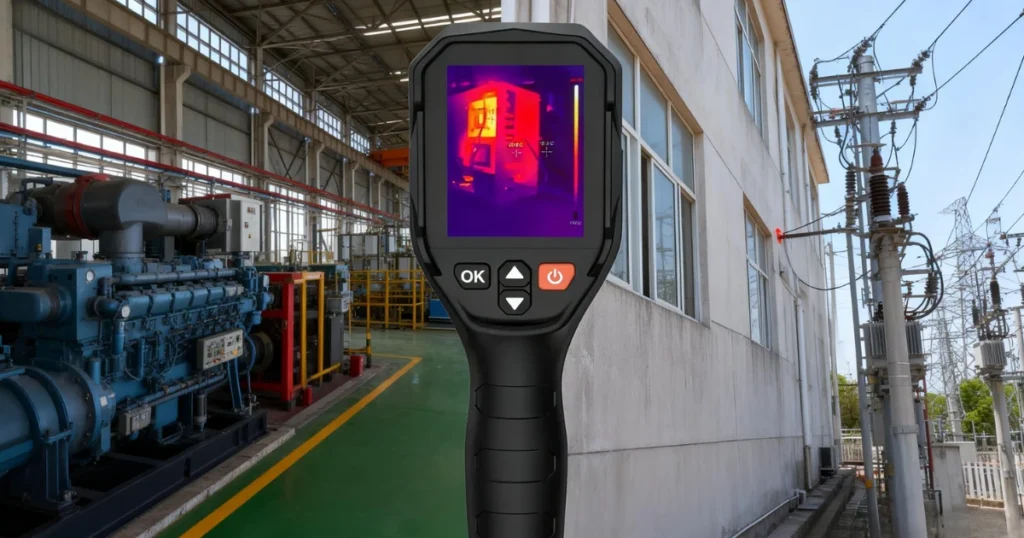
Infrared thermal imaging cameras have become essential tools for modern inspection, maintenance, and energy management. By visualizing temperature differences that cannot be seen by the naked eye, they help technicians detect hidden faults early, reduce downtime, improve safety, and lower operating costs.
For industrial users, building inspectors, maintenance engineers, and electrical technicians, thermal imaging is no longer a niche technology. It is now one of the most efficient ways to identify problems before they turn into expensive failures.
As a manufacturer of infrared thermal imaging cameras, Honeytek provides thermal imaging solutions for a wide range of inspection and diagnostic applications, from building heat-loss detection to electrical maintenance and industrial process monitoring. Honeytek’s thermal imaging range includes plug-in thermal cameras and handheld thermal imagers designed for different working environments and user requirements.
Why Infrared Thermal Imaging Cameras Matter
Temperature is often the earliest warning sign of equipment failure. Overheating electrical components, insulation defects, air leakage, failing bearings, overloaded circuits, and abnormal process temperatures can all be detected through thermal imaging before visible damage appears.
This makes infrared thermal imaging cameras highly valuable for:
- Preventive maintenance
- Electrical inspection
- Mechanical troubleshooting
- Building inspection and energy auditing
- HVAC system evaluation
- Industrial process monitoring
- Fire prevention and safety checks
Honeytek’s product materials specifically highlight applications such as detecting heat loss and insulation defects, identifying moisture intrusion and potential mold growth, finding air leaks and thermal bridges, checking overheating electrical components, monitoring motors and bearings, evaluating HVAC efficiency, monitoring production line temperatures, and locating fire hotspots.
Main Applications of Thermal Imaging Cameras
Building Inspection and Energy Auditing
Thermal imaging cameras are widely used to identify heat loss, missing insulation, thermal bridges, and air leakage in walls, roofs, windows, and doors. They are also useful for detecting hidden moisture intrusion that may lead to mold growth.
Electrical and Mechanical Maintenance
Overheating is a common indicator of electrical or mechanical problems. Thermal imagers help users quickly detect overloaded circuits, loose connections, hot fuses, failing motors, worn bearings, and other abnormal heat patterns before they lead to failure.
HVAC Inspection
In HVAC systems, thermal imaging helps evaluate ductwork performance, locate leaks, inspect radiant floor heating, and assess overall system efficiency. This makes it easier to reduce energy waste and improve system reliability.
Industrial Process Monitoring
In industrial environments, temperature consistency often affects both equipment condition and final product quality. Thermal imagers can be used to monitor furnaces, kilns, production lines, and heat-related process conditions.
Firefighting and Fire Prevention
Thermal imaging also plays an important role in locating hotspots, detecting hidden fire risks, and supporting search operations in low-visibility conditions. Honeytek’s thermal imaging category includes these use cases as part of its recommended application areas. 1_1_Thermal-Imaging2025-V.2_com…
Key Features to Consider When Choosing an Infrared Thermal Imaging Camera
Choosing the right thermal imaging camera is not only about price. It depends on your inspection distance, temperature range, target size, and the type of analysis you need.
1. Resolution
Resolution determines how much thermal detail the camera can capture. Higher detector resolution generally means clearer thermal images and better target identification. For industrial inspection, better resolution helps users identify smaller anomalies more accurately.
2. Spatial Resolution
Spatial resolution combines detector performance with field of view. It affects the smallest object that can be detected at a given distance. Lower spatial resolution values usually mean better image detail.
3. Focus Type
Different applications require different focusing methods. Common options include:
- Fixed focus for simple point-and-shoot use
- Manual focus for more precise adjustment
- Auto focus for faster operation
- Laser-assisted auto focus for distance-based precision
- Multifocal technology for enhanced depth-of-field sharpness
The right focus system depends on user skill level, working distance, and inspection complexity.
4. Temperature Range
The temperature range of a thermal imager should match the highest and lowest temperatures expected in your inspection tasks. A wider range improves versatility across electrical, mechanical, HVAC, and industrial process applications.
5. Lens Options
Interchangeable lens capability increases flexibility. Standard, wide-angle, telephoto, and macro lenses allow the same camera to handle different inspection targets and distances.
6. Image and Data Storage
Industrial users often need more than just a thermal image. The ability to save infrared images, digital images, video, and related inspection data helps with backup, reporting, and team collaboration.
Honeytek’s thermal imaging catalog shows models supporting image/video capture and storage, including handheld models with photo and video recording functions. 1_1_Thermal-Imaging2025-V.2_com…
7. Color Palettes
Different palettes help users see heat patterns more clearly depending on the task. Monochrome palettes can reveal subtle differences, while high-contrast palettes help quickly identify major anomalies.
8. Color Alarms
Color alarms are useful for highlighting temperatures above or below normal thresholds. This speeds up anomaly detection in routine inspection work.
9. Emissivity Adjustment
Low-emissivity surfaces such as shiny metals can reflect infrared energy and affect temperature accuracy. A thermal imaging camera with emissivity adjustment helps improve measurement reliability.
10. Spot Markers and Temperature Analysis
Spot markers allow users to compare temperatures at multiple points in the same image, making it easier to analyze abnormal heating patterns and support maintenance decisions.
11. Battery Type and Battery Life
Battery life directly affects field productivity. A practical industrial thermal imager should offer reliable operation time, charging convenience, and clear battery-status indication.
Honeytek’s thermal imaging lineup includes rechargeable handheld models, with examples in the catalog showing USB charging, rechargeable batteries, and extended operating times for field use. 1_1_Thermal-Imaging2025-V.2_com…
Honeytek Infrared Thermal Imaging Camera Solutions
Honeytek is a manufacturer of infrared thermal imaging cameras designed for practical industrial and inspection use. Based on the uploaded Honeytek catalog pages, the company offers multiple thermal imaging product types, including:
- TP170 / TP175 mobile plug-in thermal imaging cameras
- TI180 / TI185 handheld infrared thermal imaging cameras
- TI175 handheld infrared thermal imaging camera
- TI165 thermal imager with touch-panel display, image/video recording, and temperature alert functions
These products are positioned for building inspection, electrical and mechanical maintenance, HVAC diagnostics, industrial process monitoring, and related field applications. Honeytek’s catalog also shows features such as multiple image modes, thermal analysis support, rechargeable battery options, and different infrared resolutions depending on the model. 1_1_Thermal-Imaging2025-V.2_com…
How to Choose the Right Thermal Imager for Your Application
The best thermal imaging camera depends on how and where you plan to use it.
Choose a compact or plug-in thermal camera if you need portability, fast mobile inspection, and a lightweight solution for everyday troubleshooting.
Choose a handheld thermal imager if your work involves preventive maintenance, electrical inspection, HVAC service, or regular industrial troubleshooting.
Choose a model with higher thermal resolution, broader temperature range, and more analysis features if your work requires more detailed diagnostics, process monitoring, or more demanding inspection tasks.
When evaluating models, always compare:
- Resolution
- Thermal sensitivity
- Temperature range
- Focus system
- Image modes
- Storage capability
- Battery performance
- Usability in your working environment
Conclusion
Infrared thermal imaging cameras are powerful tools for improving inspection speed, maintenance efficiency, and equipment reliability. They help users detect abnormal heat patterns early, reduce repair costs, minimize downtime, and improve energy performance across multiple industries.
For users looking for a reliable thermal imaging solution, Honeytek offers infrared thermal imaging cameras for building inspection, electrical maintenance, HVAC diagnostics, industrial process monitoring, and field troubleshooting. With multiple product types and practical industrial features, Honeytek supports customers who need efficient and cost-effective thermal imaging solutions for real-world applications.
