
Thermal imaging is not only about seeing heat. In real inspection work, the quality of a thermal image directly affects how accurately you can identify faults, measure temperatures, and make maintenance decisions.
A thermal image that looks unclear or lacks detail can reduce the value of the inspection, and in some cases, it can even lead to incorrect conclusions. That is why image quality matters so much in infrared inspection.
A simple way to understand this is:
Image Quality = Focus + Optics + Spatial Resolution (Pixels + Field of View)
For technicians, maintenance teams, inspectors, and engineers, understanding these factors can make a major difference in inspection results.
As a manufacturer of infrared thermal imaging cameras, Honeytek believes that good thermal imaging is not just about capturing an image. It is about capturing an image that delivers clear, reliable, and actionable information.
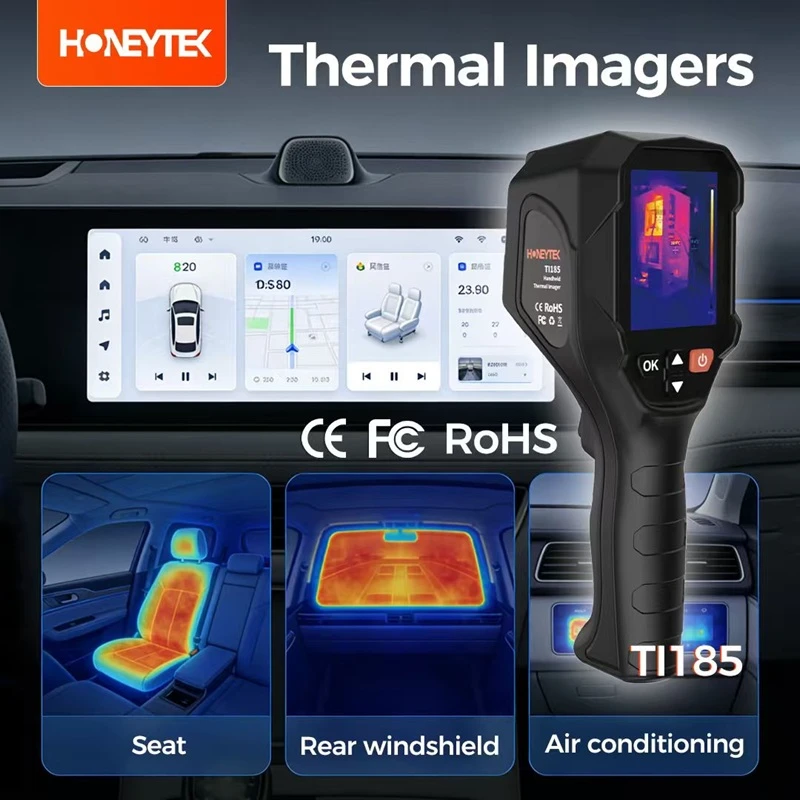
Why Thermal Image Quality Matters
In preventive maintenance, electrical inspection, building diagnostics, HVAC troubleshooting, and industrial monitoring, thermal images are used to find abnormal temperature patterns. These patterns often point to hidden problems such as overheating components, loose electrical connections, insulation defects, air leaks, or mechanical wear.
If the image quality is poor, the user may miss small hot spots, misread the severity of a problem, or collect temperature data that is less accurate than expected.
That is why taking a high-quality thermal image is one of the most important parts of successful infrared inspection.
1. Focus: The First Step to a Reliable Thermal Image
Focus is one of the most important factors in thermal imaging. A blurry image does not just look bad. It can reduce measurement accuracy and make fault detection more difficult.
In fact, an out-of-focus thermal image may cause the measured temperature to be significantly different from the real target temperature. This means a poor image can sometimes be worse than no image at all.
When selecting a thermal imaging camera, it is important to choose the right focus type for the application:
- Fixed focus for simple point-and-shoot use
- Manual focus for precise control
- Auto focus for faster and easier adjustment
The best option depends on the normal inspection distance and the type of target being measured.
2. Optics: Lens Quality Directly Affects Image Detail
The lens of a thermal imaging camera plays a critical role in image quality because it determines how efficiently infrared energy reaches the detector.
If too much infrared energy is lost through the optics, the final thermal image may lose important detail. High-quality optics help improve image sharpness, temperature reliability, and overall inspection performance.
Lens materials matter. In professional thermal imaging, efficient infrared transmission is essential. Better optics allow the detector to receive more usable thermal information from the target.
For users working in demanding industrial inspection environments, lens quality should never be overlooked.
3. Detector Resolution: More Pixels Mean More Detail
Detector resolution refers to the number of pixels on the infrared detector. Each pixel collects temperature information from a specific area of the target.
The more pixels the detector has, the more thermal detail the camera can capture.
Higher detector resolution offers several advantages:
- clearer image detail
- easier identification of small hot spots
- more precise target analysis
- better measurement support at distance
When fewer pixels are available, small faults may appear less clearly or even disappear into the image background. For electrical inspection, mechanical maintenance, and industrial troubleshooting, detector resolution is a key factor in thermal image quality.
4. Field of View: Match the Camera to the Application
Field of view, or FOV, defines how much area the thermal imager can see at one time.
A wider FOV is useful when inspecting large targets or working at close distance, such as:
- building walls
- roofs
- electrical panels
- HVAC systems
A narrower FOV is better when inspecting smaller targets from farther away.
This means the “best” field of view depends on the application. Choosing the right FOV helps improve target visibility, detail, and inspection efficiency.
For practical thermal imaging, the camera should match the real working distance and target size.
5. Spatial Resolution: A Key Indicator of Thermal Detail
Spatial resolution brings together two important elements: detector resolution and field of view.
It is often used to describe the smallest object size that can be reliably detected by the camera. Spatial resolution is typically measured in mRads.
The lower the spatial resolution value, the better the image detail and detection capability.
In simple terms, spatial resolution helps answer an important question:
How small of a problem can the camera actually see?
For users inspecting fine components, distant objects, or small temperature anomalies, spatial resolution is one of the most useful performance indicators to evaluate.
How to Get Better Thermal Images in Real Inspection Work
Taking a high-quality thermal image is not only about owning a thermal camera. It is also about using the right camera in the right way.
To improve thermal imaging results:
- make sure the image is properly focused
- choose a camera with reliable optics
- consider detector resolution based on target size
- select a field of view suited to the inspection distance
- pay attention to spatial resolution for detail-sensitive work
These factors work together. A high-resolution detector alone cannot deliver the best result if focus is poor. A good lens alone cannot compensate for an unsuitable field of view. Strong thermal imaging performance comes from the combination of all these elements.
Why This Matters for Professional Users
For professional inspections, image quality affects more than the image itself. It affects:
- fault detection speed
- temperature measurement confidence
- reporting quality
- maintenance decision-making
- overall inspection efficiency
Whether the task involves electrical maintenance, equipment troubleshooting, building diagnostics, or industrial monitoring, better image quality leads to more useful inspection results.
Honeytek’s View
At Honeytek, we believe that a thermal imaging camera should do more than capture heat patterns. It should help users see problems more clearly, measure with greater confidence, and make faster maintenance decisions.
As a manufacturer of infrared thermal imaging cameras, Honeytek focuses on practical imaging performance for real inspection environments. That means paying attention not only to resolution, but also to the full picture: focus, optics, field of view, and spatial resolution.
Because in thermal imaging, a better image is not just a better picture. It is a better diagnostic tool.
Conclusion
High-quality thermal images are essential for accurate infrared inspection. If users want more reliable results, they should focus on five key factors:
- focus
- optics
- detector resolution
- field of view
- spatial resolution
Understanding these factors helps users choose the right thermal imaging camera and get better results in the field.
For professionals looking for dependable infrared inspection tools, Honeytek provides thermal imaging solutions designed to support clearer images, more reliable diagnostics, and more efficient maintenance work.
