
With the rapid adoption of electric vehicles (EVs) and energy storage systems, power battery performance and safety have become critical concerns for manufacturers, engineers, and operators.
As one of the core components of new energy vehicles, the power battery pack directly determines vehicle safety, reliability, and lifecycle cost. In this context, infrared thermal imaging has emerged as an advanced non-destructive inspection and early-warning technology, widely used for battery monitoring and fault analysis.
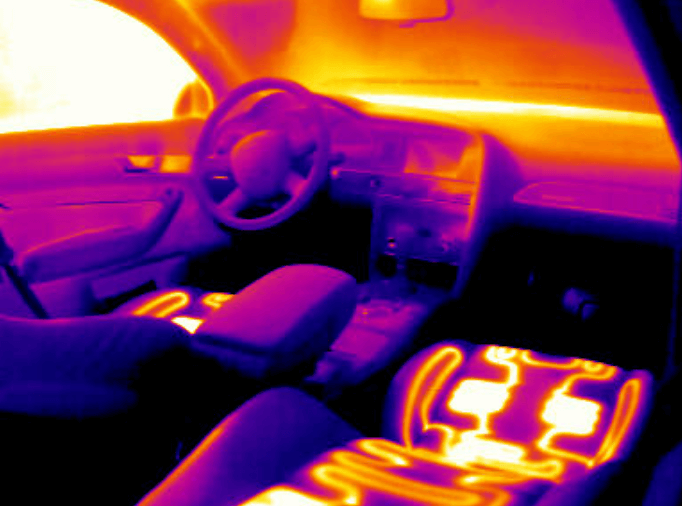
Why Battery Inspection Requires More Than Electrical Data
Modern power battery systems consist of hundreds or even thousands of cells connected in complex series-parallel configurations.
While Battery Management Systems (BMS) monitor voltage, current, and SOC, many early-stage failures do not immediately appear in electrical parameters.
Instead, they often manifest first as abnormal heat distribution.
Infrared thermal imaging addresses this gap by providing visual, spatial, and real-time temperature information, revealing risks that conventional sensors may miss.
What Is Infrared Thermal Imaging?
Infrared thermal imaging uses a thermal camera to detect infrared radiation emitted from object surfaces and convert it into a visual temperature map.
In battery diagnostics, this technology enables engineers to:
- Observe temperature distribution across the battery surface
- Identify thermal non-uniformity
- Infer internal structural or performance issues
Because it is non-contact and non-destructive, thermal imaging is particularly suitable for high-voltage battery systems.
Key Applications of Infrared Thermal Imaging in Power Battery Detection
1. Temperature Distribution and Hotspot Detection
By scanning the surface of battery modules or PACKs with an infrared thermal imager, engineers can quickly obtain a full temperature profile.
This allows early identification of:
- Localized hotspots
- Abnormal heating zones
- Uneven thermal distribution between cells
Such anomalies often indicate internal resistance increase, aging imbalance, or early-stage defects. Detecting them early helps prevent failures and significantly reduces safety risks.
2. Thermal Runaway Risk Assessment
Thermal runaway is one of the most serious hazards in lithium battery systems.
Infrared thermal imaging helps assess this risk by:
- Monitoring temperature differences between individual cells
- Identifying abnormal heat accumulation
- Evaluating thermal consistency within modules
When excessive temperature deviation is detected, engineers can promptly adjust cooling strategies or operating parameters, preventing escalation into thermal runaway.
3. Thermal Behavior During Charge and Discharge
Battery performance is closely linked to heat generation during charging and discharging.
By continuously monitoring temperature changes under different operating conditions, thermal imaging enables engineers to:
- Analyze heat generation patterns
- Understand thermal response to load changes
- Optimize charging and discharging strategies
This data-driven insight improves battery utilization efficiency while extending service life.
Advantages of Infrared Thermal Imaging for Battery Inspection
Compared with traditional inspection methods, infrared thermal imaging offers several decisive advantages:
- Fast and intuitive: Large-area temperature information in real time
- Accurate and sensitive: Detects small temperature differences
- Non-destructive: No need to dismantle battery systems
- Safe: Ideal for high-voltage and energized components
These features make thermal imaging an essential tool throughout the battery lifecycle—from R&D and validation to production and after-sales maintenance.
Real-World Engineering Value
In practical engineering environments, infrared thermal imaging is used to:
- Detect early-stage battery defects
- Validate thermal management system performance
- Support battery aging and consistency studies
- Reduce unplanned downtime and safety incidents
As battery systems become more energy-dense and compact, thermal visibility is no longer optional—it is fundamental to safety.
Frequently Asked Questions (FAQ)
Q1: Can infrared thermal imaging detect battery faults before BMS alarms appear?
Yes. Many battery issues first appear as localized heat anomalies before electrical thresholds are exceeded.
Q2: Is infrared thermal imaging safe for high-voltage battery inspection?
Yes. It is a non-contact method, making it inherently safer than probe-based measurements.
Q3: Can thermal imaging be used during live charging and discharging?
Absolutely. Real-time thermal monitoring is one of its key strengths.
Q4: Is infrared thermal imaging suitable for both EVs and energy storage systems?
Yes. The same principles apply to EV battery packs, ESS containers, and industrial battery systems.
About Honeytek
Honeytek is a professional manufacturer of infrared thermal imagers, digital multimeters, and clamp meters, serving automotive, new energy, and industrial testing markets worldwide.
- OEM / ODM customization supported
- Stable manufacturing and engineering capabilities
- Actively recruiting global distributors and agents
📩 Contact Honeytek to explore customized testing solutions and partnership opportunities in the new energy battery industry.
