
As photovoltaic systems scale toward higher voltages and larger capacities, solar operation and maintenance (O&M) is under increasing pressure. Utility-scale and commercial PV plants demand faster fault isolation, more accurate reporting, and higher safety standards—often with fewer technicians on site.
Yet many solar teams still rely on manual measurement and handwritten records, a workflow that no longer matches the complexity of modern PV systems. The result is predictable: longer troubleshooting cycles, higher error rates, and delayed client reporting.
This article explores how digital measurement tools, particularly wireless multimeters with Bluetooth and data logging, can realistically shorten PV troubleshooting time by up to 30%. It also demonstrates how modern workflows enable “measure-and-send” operations and instant report generation—critical for field engineers and third-party inspection agencies.
Why Traditional PV Troubleshooting Is No Longer Efficient
Manual Data Recording: A Hidden Bottleneck
In many PV maintenance scenarios, the process still looks like this:
- Measure voltage, current, or resistance
- Write values on paper or spreadsheets
- Return to the office
- Manually re-enter data
- Compile reports for clients
This approach introduces several systemic problems:
- Human error during transcription
- Inconsistent data formats across technicians
- Lost or incomplete records in outdoor environments
- Delayed analysis, often hours or days after site work
In high-voltage solar environments, troubleshooting speed is not just about efficiency—it directly affects system uptime and revenue.
The Digital Shift in PV Troubleshooting Workflows
From “Measure and Write” to “Measure and Transmit”
Modern wireless multimeters equipped with Bluetooth connectivity fundamentally change the workflow:
- Measurements are captured digitally
- Data is transmitted instantly to a mobile device
- Records are stored automatically with timestamps
- Results are ready for analysis in real time
This “measure once, use everywhere” approach eliminates redundant steps and reduces rework.
For PV troubleshooting, where dozens or hundreds of strings may need verification, the time savings compound rapidly.
Key Technologies That Enable Faster PV Troubleshooting
Bluetooth Connectivity for Real-Time Data Transfer
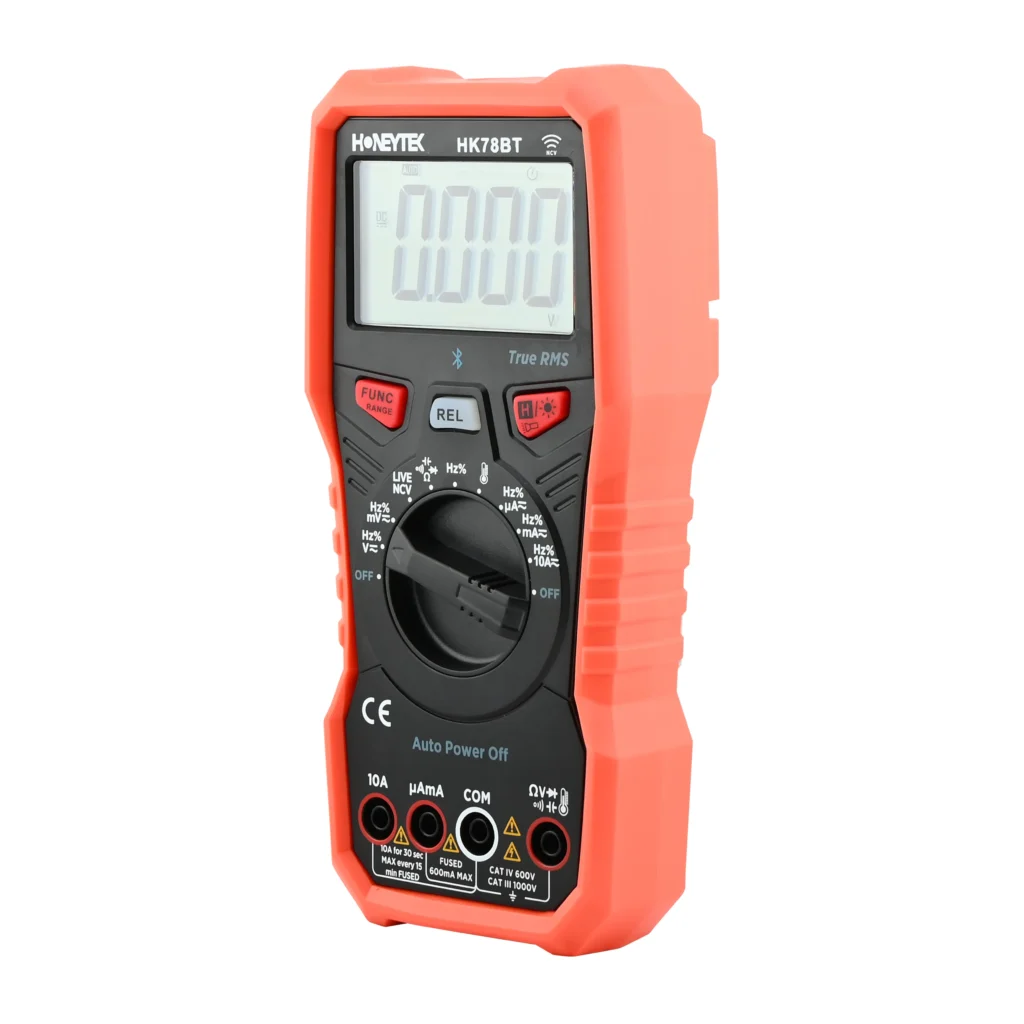
HK78BT 6000 Counts TRMS Auto Range Digital Multimeter with Bluetooth
Bluetooth-enabled multimeters allow technicians to send readings directly to a smartphone or tablet. This is especially valuable in solar plants where:
- Measurement points are physically separated
- Weather conditions limit writing or typing
- Teams work in parallel across large sites
Real-time transmission ensures no data is lost and allows supervisors to review measurements immediately.
Data Logging for Continuous Measurement
Data logging is critical for diagnosing intermittent PV faults, such as:
- Inverter startup anomalies
- DC voltage fluctuations
- Temperature-related performance drops
Instead of repeated manual checks, the multimeter automatically records data over time, creating a reliable dataset for analysis.
This is particularly valuable for PV troubleshooting involving early-morning or peak-sun conditions that are easy to miss.
Mobile Apps and Instant Visualization
When paired with a mobile app, digital multimeters can:
- Organize measurements by project or string
- Display trends and abnormal values instantly
- Export data in professional report formats
For third-party inspection agencies, this means same-day reporting instead of post-site-office delays.
Generating I-V Curve Reports Directly from Field Data
Why I-V Curves Matter in Solar Diagnostics
The I-V curve remains one of the most powerful tools for PV performance analysis. It helps identify:
- Mismatch losses
- Degraded modules
- Shading or soiling issues
- Connection faults
Traditionally, I-V curve testing required separate instruments and manual data processing. Today, integrated digital workflows significantly reduce that complexity.
From Measurement to Client Report in One Workflow
With wireless data capture and logging:
- Field measurements are taken
- Data is transferred to a mobile device
- The app processes values into curve-ready datasets
- Reports are generated and shared with clients
This process not only saves time but also improves data credibility, as reports are directly traceable to recorded measurements.
Recommended Digital Tools for Modern Solar O&M
As a professional electronic measurement tool manufacturer, Honeytek designs digital multimeters and clamp meters specifically for demanding electrical environments, including solar PV systems.
Below are two instruments commonly deployed together in advanced PV troubleshooting workflows.
HONEYTEK HK888D – Digital Clamp Meter for PV Applications
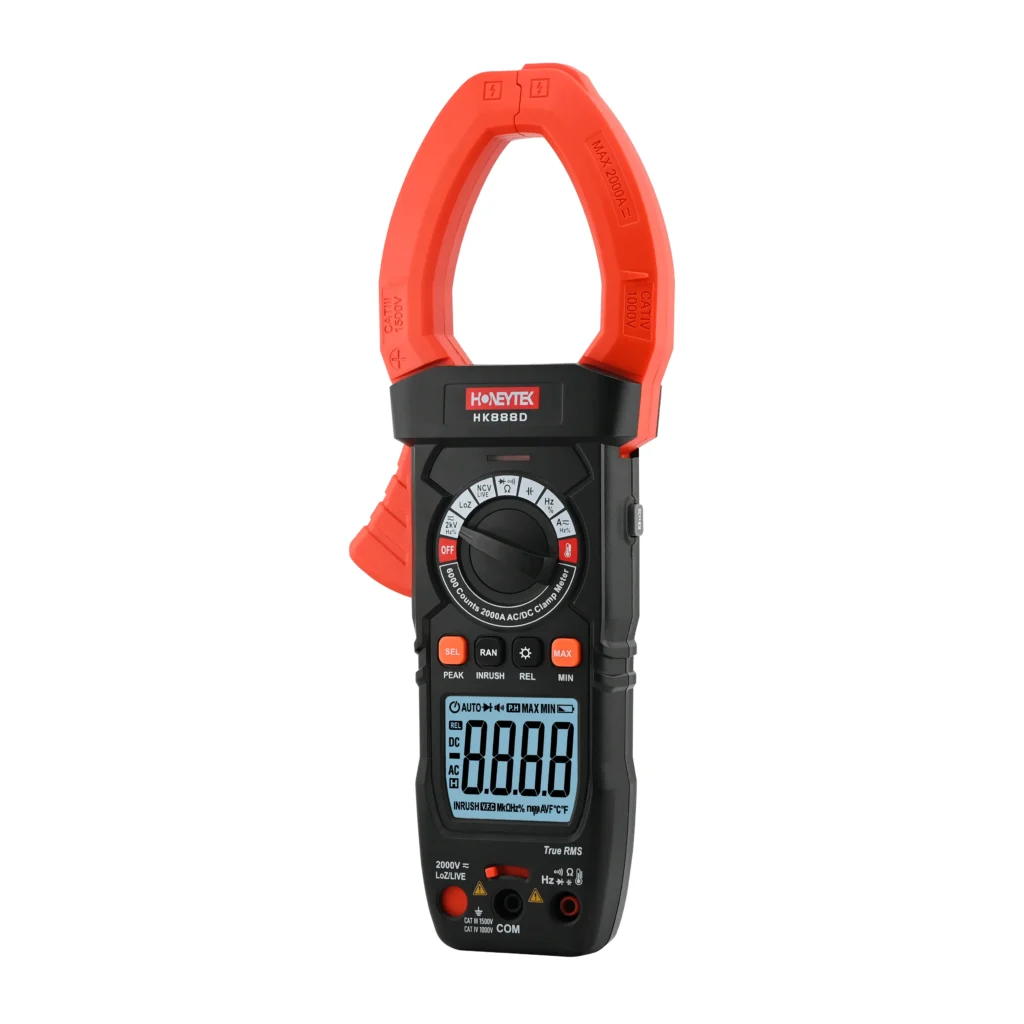
The HK888D is designed for high-voltage, high-current solar environments and supports efficient, safe troubleshooting.
Key capabilities include:
- High safety rating suitable for modern PV systems
- AC/DC current measurement for string and inverter analysis
- True RMS accuracy for power electronics
- Support for advanced diagnostic functions such as inrush current and peak capture
For PV engineers, a clamp meter like the HK888D enables fast current checks without breaking the circuit, significantly improving on-site efficiency.
HONEYTEK HK78G – High-Voltage Digital Multimeter
The HK78G complements clamp meters by providing precise voltage and signal measurements essential to PV diagnostics.
Key benefits include:
- Wide DC voltage measurement range suitable for PV strings
- True RMS auto-ranging for accuracy
- Support for resistance, capacitance, frequency, and temperature testing
- Compact design optimized for field work
Together, the HK888D and HK78G form a digital troubleshooting toolkit aligned with modern solar maintenance needs.
How Digital Tools Deliver a 30% Efficiency Gain
Reduced On-Site Time
Instant data capture and transfer reduce repetitive measurements and eliminate manual logging.
Faster Fault Identification
Logged data and real-time visualization help engineers pinpoint issues earlier in the process.
Shorter Reporting Cycles
Reports can be generated on-site or immediately after leaving the plant, accelerating client delivery.
Improved Data Consistency
Standardized digital records reduce discrepancies across technicians and projects.
Who Benefits Most from Digital PV Troubleshooting Tools
Field Engineers
- Less paperwork
- Faster diagnostics
- Higher personal safety
Solar Managers
- Better visibility into field operations
- Faster decision-making
- Improved asset performance tracking
Third-Party Inspection Agencies
- Professional, standardized reports
- Faster turnaround for clients
- Higher data credibility
FAQ – Digital Multimeters and PV Troubleshooting
What is PV troubleshooting?
PV troubleshooting is the process of diagnosing and resolving faults in photovoltaic systems, including issues related to voltage, current, insulation, temperature, and module performance.
How does a wireless multimeter improve solar maintenance?
A wireless multimeter transmits measurement data directly to a mobile device, reducing manual recording errors and speeding up diagnostics and reporting.
Is data logging necessary for PV systems?
Yes. Data logging is essential for capturing intermittent or time-dependent issues that cannot be detected with single-point measurements.
Can digital multimeters replace traditional PV test workflows?
They significantly reduce manual steps and complement specialized tests such as insulation resistance or I-V curve analysis, making the overall workflow faster and more reliable.
You may like these:
- How to Choose a Photovoltaic CAT III 1500V Clamp Meter
- Auto-Ranging vs Manual-Ranging Multimeters: A Beginner’s Guide to Choosing the Right One
- Smart SMD Tester vs Handheld LCR Meter: Advantages, Limitations, and How to Choose
- How to Measure Capacitance and ESR with Smart Tweezers
- What Is a Smart SMD Tester?
