
Introduction
Infrared (IR) and thermal imaging are often mentioned together, and for good reason — both technologies visualize what’s invisible to the human eye. However, while they share a foundation in infrared radiation detection, their operating principles, sensor technologies, and applications differ significantly.
In this article, we’ll explore how infrared imaging and thermal imaging work, what distinguishes one from the other, and how Honeytek’s cutting-edge infrared thermal imagers provide precise, real-time temperature analysis for industrial, commercial, and maintenance use.

What Is Infrared Imaging?
Infrared imaging refers to the process of capturing infrared radiation emitted or reflected by objects and converting it into a visible image. It works by detecting near-infrared light — typically in the wavelength range of 0.75 to 1.4 micrometers (μm) — and transforming it into visible light through photoelectric conversion.
How Infrared Imaging Works
Infrared imaging systems consist of several key components:
- Photoelectric cathode: Converts incoming infrared radiation into photoelectrons.
- Electron optics system: Accelerates and focuses electrons onto a phosphorescent screen.
- Phosphor screen: Emits visible light corresponding to the infrared intensity pattern.
Common photoelectric materials include silver-oxygen-cesium (S1) and antimony-potassium-sodium oxide (S25) cathodes, which are sensitive to near-infrared wavelengths. When infrared radiation excites these cathodes, electrons are released and guided to a phosphor screen, creating a visible image that mirrors the original infrared pattern.
Infrared Imaging Devices
Different infrared imaging tubes are designed for various spectral responses:
- Infrared-conductive camera tubes: Similar in structure to standard video camera tubes, but use lead sulfide (PbS) as the photosensitive layer for near-infrared detection.
- Silicon-target camera tubes: Use silicon diode arrays as sensors, responsive primarily to near-infrared light.
- Pyroelectric camera tubes: Employ pyroelectric materials such as deuterated triglycine sulfate (DTGS), which generate polarization charges proportional to temperature changes.
Infrared imaging primarily detects reflected or emitted near-infrared radiation, converting it into a visible grayscale or pseudo-color image. This makes it suitable for applications such as night vision, surveillance, optical analysis, and scientific imaging.

What Is Thermal Imaging?
Thermal imaging is a specific type of infrared imaging that detects long-wave infrared radiation (8–14 μm) emitted by objects due to their temperature. Every object above absolute zero (-273.15°C) emits infrared radiation proportional to its surface temperature.
How Thermal Imaging Works
Thermal imaging systems measure these infrared emissions and convert them into temperature data, which is displayed as a color-coded thermographic image (heat map).
Hotter areas appear in warmer colors (red, yellow, white), while cooler regions appear in darker tones (blue, purple, black).
For instance, human skin at 36°C emits infrared radiation in the 9–10 μm wavelength range, which is invisible to the naked eye but easily captured by thermal sensors. These systems are designed to measure temperature distribution, energy loss, and heat anomalies in real time.
Human Body Temperature and Thermal Imaging
In medical thermography, thermal cameras are used to visualize temperature differences on the skin surface, which can indicate abnormalities such as inflammation, circulatory issues, or tissue dysfunction.
For example:
- Inflamed tissue → higher local temperature (hot spot).
- Poor blood circulation → lower local temperature (cold spot).
Professional medical software then analyzes these images, providing valuable insights for clinical diagnostics and preventive care.
Key Differences Between Infrared Imaging and Thermal Imaging
| Feature | Infrared Imaging | Thermal Imaging |
|---|---|---|
| Wavelength Range | 0.75 – 1.4 μm (Near-Infrared) | 8 – 14 μm (Long-Wave Infrared) |
| Detection Principle | Converts reflected or emitted infrared into visible light | Detects heat radiation emitted by objects |
| Main Output | Visible infrared image | Color-coded thermal map |
| Sensitivity | Requires external infrared light or reflected radiation | Works with emitted heat (no illumination needed) |
| Applications | Night vision, surveillance, research, semiconductor inspection | Building diagnostics, maintenance, fire detection, healthcare |
| Environment | Needs ambient or active IR illumination | Works perfectly in total darkness |
| Measurement Capability | Primarily qualitative imaging | Quantitative temperature measurement |
In summary, infrared imaging focuses on visualizing near-infrared light, while thermal imaging visualizes heat. Thermal imaging can therefore quantify temperature variations directly, making it ideal for diagnostics and industrial monitoring.
Applications of Thermal Imaging
Modern thermal imagers, such as Honeytek TP170, TP175, TI180, and TI185, are widely used across multiple industries for diagnostics, safety, and efficiency.
1. Building Inspection & Energy Auditing
- Detect heat loss and insulation defects
- Identify moisture intrusion and potential mold growth
- Locate air leaks and thermal bridges
2. Electrical & Mechanical Maintenance
- Detect overheating electrical components
- Identify failing motors or bearings
- Monitor equipment performance and safety
3. HVAC Systems
- Assess ductwork efficiency
- Detect leaks in radiant floor heating systems
- Evaluate overall system performance
4. Industrial Process Monitoring
- Measure production line temperatures
- Check product uniformity and quality
- Assess furnace and kiln operations
5. Firefighting & Emergency Response
- Locate hotspots and smoldering areas
- Identify fire hazards
- Support search and rescue in low-visibility environments
Honeytek Thermal Imagers: Precision Meets Portability
Honeytek — a trusted electronic measurement instrument manufacturer — provides high-performance infrared thermal imaging solutions designed for diverse professional needs.
TP170/TP175 – Mobile Plug-in Thermal Imaging Camera
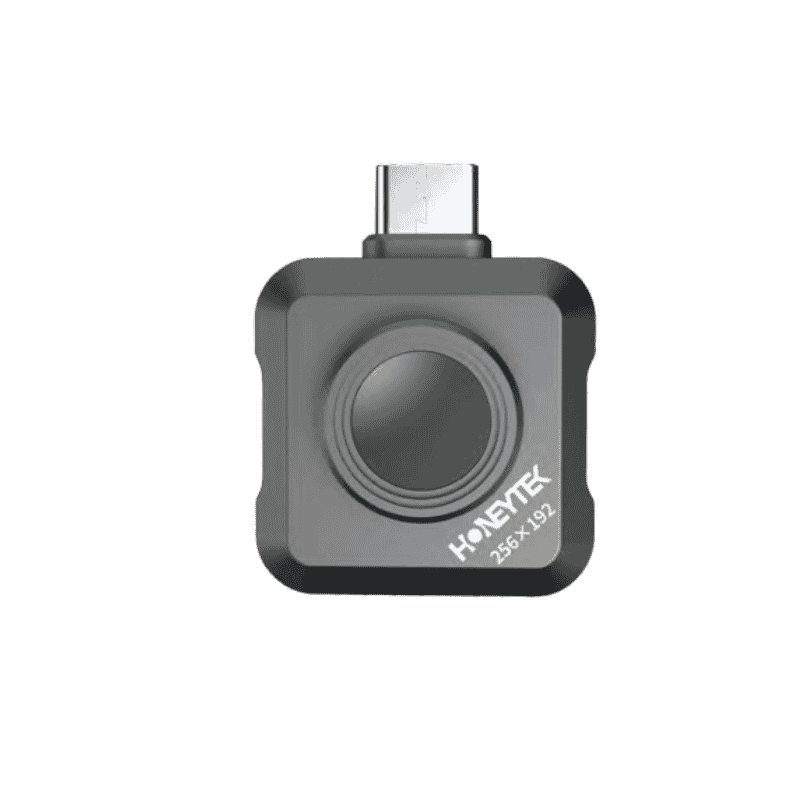
- Temperature Range: -20°C to 550°C
- Resolution Options: 160×120 or 256×192 infrared pixels
- Real-Time Alarming: Customizable high/low temperature alerts
- 15 Color Palettes: Adjustable for different inspection needs
- Multi-Point Measurement: Supports 3 points, 3 lines, and 3D temperature display
- Image Modes: Thermal imaging / Picture-in-Picture for flexible visualization
TI180/TI185 – Handheld Infrared Thermal Imaging Camera

- Temperature Range: -20°C to 550°C
- Resolution Options: 160×120 or 256×192
- Three Temperature Units: °C / °F / K
- Manual Flashlight Function: For dark environments
- Four Image Modes: Infrared, Visible Light, Fusion, and Picture-in-Picture
- 16GB Built-in Storage: One-click data export for efficiency
- Rechargeable Battery: Long-lasting and fast charging
Honeytek’s thermal imagers are engineered to deliver accurate temperature analysis, easy operation, and high reliability, supporting professionals in inspection, maintenance, and diagnostics across industries.
FAQ About Infrared and Thermal Imaging
1. Is thermal imaging a type of infrared imaging?
Yes. Thermal imaging is a specialized form of infrared imaging focused on detecting long-wave infrared radiation emitted as heat from objects.
2. Can thermal cameras see through walls or glass?
No. Thermal cameras cannot see through solid materials like walls or glass; they detect surface heat rather than penetrating radiation.
3. Are infrared and thermal cameras safe to use?
Absolutely. Both use passive detection, meaning they capture naturally emitted or reflected infrared light without emitting harmful radiation.
4. What’s the best temperature range for thermal cameras?
Honeytek thermal imagers cover -20°C to 550°C, suitable for most industrial, maintenance, and inspection applications.
5. How accurate are Honeytek thermal imagers?
Honeytek cameras deliver high-resolution imaging and precise temperature measurement accuracy, ideal for both professional and research-grade use.
Conclusion
While infrared imaging focuses on near-infrared light for optical visualization, thermal imaging translates heat emissions into measurable temperature data — transforming invisible thermal energy into actionable insights.
Whether you’re conducting building audits, inspecting electrical systems, or ensuring manufacturing quality, Honeytek’s advanced infrared thermal imagers provide reliability, precision, and versatility for every task.
