
In industrial facilities, power distribution rooms, electrical maintenance sites, and HVAC systems, digital multimeters are among the most frequently used diagnostic tools. However, a common mistake in tool selection is assuming that a standard household multimeter is sufficient for industrial work.
An industrial digital multimeter is specifically designed for high-energy, high-voltage, and high-interference environments. Compared with consumer-grade meters, industrial models offer significantly enhanced safety ratings, measurement accuracy, durability, and advanced diagnostic functions.
This article explains what defines an industrial multimeter, where it is used, and how to choose the right model for professional applications.
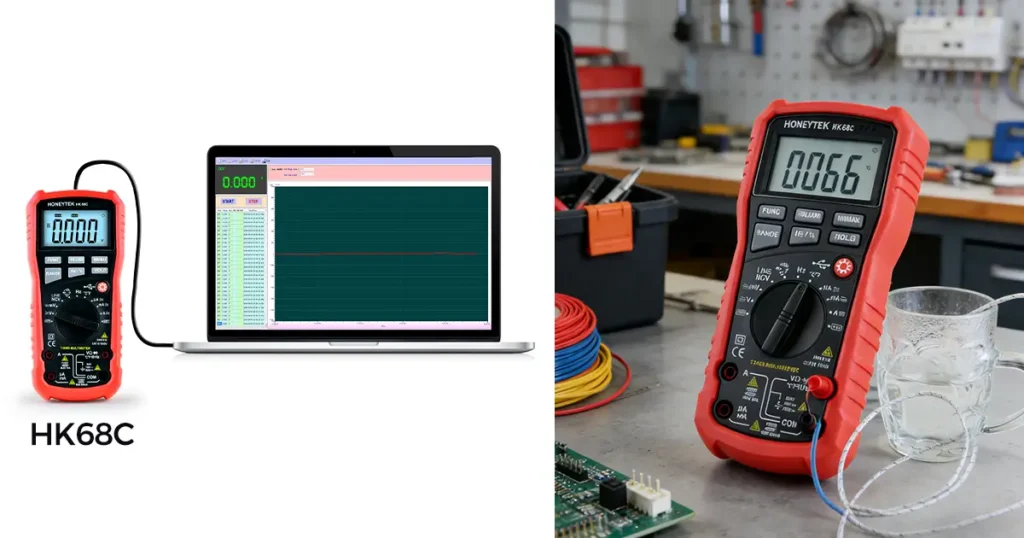
1. Definition of an Industrial Digital Multimeter
Industrial digital multimeters are engineered for demanding environments such as:
- Factory power distribution and control cabinets
- Industrial motor and equipment maintenance
- Variable Frequency Drives (VFDs) and power electronics
- HVAC installation and servicing
- Power, solar, and energy storage systems
The core objective is not only to measure electrical parameters, but to do so safely, accurately, and reliably in high-risk conditions.
2. Key Characteristics of Industrial Multimeters
2.1 Higher Safety Ratings (CAT Classification)
Safety is the most critical factor in industrial measurement.
Typical industrial multimeters are rated:
- CAT III 1000 V
- CAT IV 600 V
These ratings indicate the meter’s ability to withstand high-energy transient surges commonly found in:
- Distribution panels
- Fixed industrial installations
- Building power feeders
To achieve this, industrial meters incorporate:
- High-energy ceramic fuses
- Reinforced insulation structures
- Built-in surge and transient protection
These features significantly reduce the risk of injury or instrument failure due to incorrect connections or unexpected voltage spikes.
2.2 Comprehensive Measurement Capability
A professional industrial multimeter typically supports:
Voltage
- Up to 1000 V AC / DC
- Suitable for three-phase systems and industrial power supplies
Current
- Standard 10 A continuous measurement
- Some models support short-duration 20 A testing
- Expandable to high current ranges using clamp accessories
Additional Functions
- Resistance, continuity, diode testing
- Capacitance, frequency, duty cycle
- Temperature measurement using K-type probes
This range of functions covers most industrial maintenance, commissioning, and troubleshooting tasks.
2.3 True RMS Accuracy for Modern Loads
Modern industrial systems frequently use:
- Variable frequency drives
- Switching power supplies
- Non-linear electrical loads
These systems produce non-sinusoidal waveforms that cannot be measured accurately by average-responding meters.
True RMS industrial multimeters calculate the real effective value of distorted waveforms, ensuring accurate readings in real-world industrial environments.
2.4 Transient Capture and Recording Functions
Many industrial electrical faults are intermittent rather than continuous, such as:
- Voltage drops during motor startup
- Inrush current surges
- Transient overvoltage events
For this reason, industrial multimeters often include:
- MAX / MIN / AVG recording
- Long-term fluctuation monitoring
- Peak or transient capture functions for short-duration events
These capabilities are essential for diagnosing startup issues, power quality problems, and intermittent faults.
2.5 Durability for Harsh Field Conditions
Industrial environments often involve:
- Dust and moisture
- Mechanical vibration
- Temperature variation
Industrial multimeters are therefore designed with:
- Enhanced dust and water resistance (some models up to IP67)
- Drop resistance of 1.5–2 meters
- Large backlit displays for low-light conditions
- Clear button layouts for gloved operation
These design features improve usability and extend service life in demanding conditions.
3. How to Choose an Industrial Multimeter for Surge and Startup Testing
If your primary applications include industrial equipment maintenance, motor startup diagnostics, or surge troubleshooting, consider the following when selecting a multimeter:
- Safety Rating
- Minimum CAT III 1000 V or CAT IV 600 V
- True RMS with Optional LPF
- Ensures accurate readings on VFD outputs and noisy signals
- Recording and Peak Capture
- MAX / MIN or transient modes for identifying short-duration anomalies
- Display and Ergonomics
- Large backlit screen and intuitive controls for field efficiency
Frequently Asked Questions (FAQ)
Q1: Can an industrial multimeter be used in residential applications?
Yes. Industrial multimeters can be safely used in residential settings, although their advanced features and higher cost may exceed typical household requirements.
Q2: What is the main difference between CAT III and CAT IV ratings?
CAT IV is designed for utility-level and building entry measurements, while CAT III is suitable for distribution panels and fixed industrial installations. CAT III 1000 V is commonly sufficient for most industrial maintenance tasks.
Q3: Why is True RMS important in industrial environments?
Without True RMS capability, measurements on distorted waveforms can be significantly inaccurate, potentially leading to incorrect diagnostics or unsafe decisions.
Q4: Can an industrial multimeter directly measure motor inrush current?
Standard 10 A inputs are not suitable for large motor inrush currents. For such applications, a clamp meter or inrush-capable clamp meter should be used.
Q5: Is rugged design really necessary?
For field service, factory floors, or outdoor maintenance, rugged construction greatly reduces downtime and replacement costs caused by accidental drops or environmental exposure.
Looking for a reliable industrial multimeter or clamp meter for professional applications?
Honeytek is a specialized digital multimeter and clamp meter manufacturer, providing solutions designed for industrial maintenance, power systems, HVAC, solar, and electrical professionals worldwide.
You may like these:
- How to Choose the Right Jaw Opening for Your Digital Clamp Meter
- Key Specifications for Choosing an Industrial High-Current Clamp Meter
- How to Measure DC Current in a Photovoltaic (PV) System Using Clamp Meter
- AC-Only vs. AC/DC Clamp Meters: Choosing the Right Tool for Your Electrical Applications
- Accuracy Comparison of Digital Multimeters, Portable Capacitance Meters, and LCR Meters
