
As photovoltaic systems continue to scale in voltage, capacity, and geographic deployment, measurement tools have become a strategic procurement item rather than a simple accessory. For procurement managers, supply chain leaders, and regional distributors, selecting the right Solar PV Multimeter directly impacts project safety, operational efficiency, and tender compliance.
Unlike general electrician meters, photovoltaic-specific multimeters are designed to operate in high-voltage DC environments, harsh outdoor conditions, and regulated project frameworks. This guide outlines five key dimensions that professional buyers must evaluate when sourcing multimeters for solar applications—particularly for utility-scale and commercial PV projects.
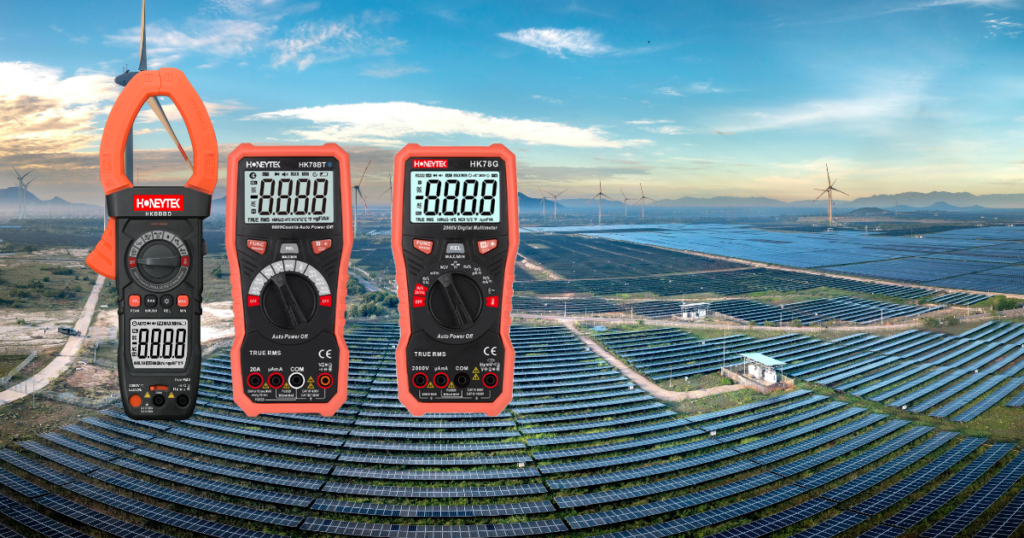
Why Solar PV Multimeters Are Different from Standard Electrician Meters
A common procurement mistake is treating PV measurement tools as interchangeable with standard electrical multimeters. In reality, solar installations introduce unique technical and environmental challenges:
- Sustained high-voltage DC exposure
- Outdoor use under strong sunlight and extreme temperatures
- Specialized connectors such as MC4
- Strict safety and compliance requirements for large-scale projects
A Solar PV Multimeter is engineered to address these challenges systematically, while a conventional electrician meter may only meet indoor or low-voltage use cases.
Dimension One: PV-Specific Functional Design
MC4 Compatibility and Safer Connections
Photovoltaic systems rely heavily on MC4 connectors. A PV-dedicated multimeter often supports:
- MC4-compatible test leads
- Secure, non-invasive connection without improvised adapters
- Reduced risk of arc faults or loose contacts
From a procurement perspective, MC4 compatibility reduces accessory costs, minimizes field improvisation, and improves overall safety compliance.
Anti-Glare and High-Brightness Display
PV measurements are performed outdoors, often under direct sunlight. Unlike standard meters, solar multimeters typically feature:
- High-contrast LCDs
- Anti-glare screen coatings
- Backlighting optimized for daylight readability
For field teams, improved display visibility directly reduces reading errors and speeds up inspection tasks.
Dimension Two: Environmental Adaptability for Harsh Sites
Why IP67 Matters in Real-World PV Installations
Many PV plants are located in deserts, coastal regions, or high-humidity zones, where dust, sand, and moisture are unavoidable.
An IP67-rated multimeter provides:
- Complete protection against dust ingress
- Resistance to temporary water immersion
- Longer service life in outdoor environments
For procurement managers, higher ingress protection means fewer replacements, lower warranty claims, and better total cost of ownership.
Temperature and Weather Resistance
Solar equipment is often exposed to:
- High daytime temperatures
- Rapid temperature changes between day and night
- Condensation in coastal or humid regions
PV multimeters are typically designed with extended operating temperature ranges and reinforced internal insulation to maintain measurement stability under these conditions.
Dimension Three: Safety Ratings and PV-Specific Standards
Understanding CAT Ratings in Solar Applications
Safety is the most critical evaluation factor when selecting Industrial Test Tools for PV systems.
Recommended minimum safety levels include:
- CAT III 1000V or higher for string and combiner box measurements
- Support for high-energy DC transients common in PV arrays
A meter that merely supports a high voltage range is not necessarily safe unless it also carries the appropriate measurement category rating.
PV Safety Standards and Best Practices
Beyond CAT ratings, professional Solar PV Multimeters are designed with:
- Reinforced creepage and clearance distances
- High-quality input protection components
- DC arc-resistant internal layouts
These design features are essential for reducing the risk of internal failure, arc flash, or meter damage during fault conditions.
Dimension Four: Certification and Compliance for Large Projects
Why Certifications Matter in Procurement and Tendering
For utility-scale and government-backed solar projects, certification compliance is often non-negotiable.
Key certifications commonly required include:
- CE – Compliance with European safety and EMC directives
- RoHS – Restriction of hazardous substances
- ETL or equivalent – Independent safety validation for certain markets
From a procurement standpoint, certified products:
- Simplify project approval
- Reduce compliance risks during audits
- Improve acceptance by EPC contractors and end clients
Selecting uncertified tools can delay projects or disqualify bids altogether.
Documentation and Traceability
Professional multimeter manufacturers provide:
- Test reports and declarations of conformity
- Consistent model specifications across production batches
- Stable long-term supply for multi-year projects
This level of documentation is particularly important for distributors and agents supporting international solar projects.
Dimension Five: System Integration and Professional Tool Kits
Building an Electrician Professional Tool Kit for PV Projects
A Solar PV Multimeter rarely works alone. In professional deployments, it is part of a broader Electrician Professional Tool Kit, typically including:
- Digital multimeters for voltage and signal testing
- Digital clamp meters for non-intrusive current measurement
- MC4 test leads and high-voltage probes
Procurement decisions should consider tool compatibility and standardization across teams to reduce training and operational complexity.
Manufacturer Capability and Engineering Support
Choosing a manufacturer—not just a product—is increasingly important.
A qualified multimeter manufacturer / factory should offer:
- Stable production capacity for bulk orders
- Engineering support for application-specific requirements
- Customization options for branding, packaging, or specifications
For procurement managers and distributors, direct access to manufacturer expertise reduces risk and improves long-term cooperation.
FAQ – Choosing a Solar PV Multimeter
What is a Solar PV Multimeter?
A Solar PV Multimeter is a measurement instrument specifically designed for photovoltaic systems, supporting high DC voltages, PV connectors, outdoor use, and enhanced safety standards.
Can a standard electrician multimeter be used in PV systems?
It may function for basic measurements but often lacks the safety ratings, environmental protection, and PV-specific features required for professional solar applications.
Why is IP67 important for solar projects?
IP67 protection ensures reliable operation in dusty, wet, or coastal environments, which are common locations for large PV plants.
Do certifications really affect solar project bidding?
Yes. Certifications such as CE, RoHS, and ETL are frequently mandatory in large-scale or government-funded solar projects.
What should distributors look for in a multimeter manufacturer?
Consistent quality, certification support, engineering expertise, and the ability to supply products in volume over long project timelines.
Selecting the right Solar PV Multimeter is a critical procurement decision that affects safety, compliance, and long-term operational efficiency.
Honeytek is a professional manufacturer of electronic measurement tools, including digital multimeters and digital clamp meters, serving photovoltaic applications worldwide. We support bulk procurement, distributor partnerships, and project-based customization.
Contact Honeytek’s experts today to discuss your photovoltaic measurement requirements and receive competitive bulk pricing for your Electrician Professional Tool Kit.
You may like these:
- How to Choose a Photovoltaic CAT III 1500V Clamp Meter
- Auto-Ranging vs Manual-Ranging Multimeters: A Beginner’s Guide to Choosing the Right One
- Smart SMD Tester vs Handheld LCR Meter: Advantages, Limitations, and How to Choose
- How to Measure Capacitance and ESR with Smart Tweezers
- What Is a Smart SMD Tester?
